

The Challenge: Rapidly Scale All-Electric Retrofits of Small, Multifamily Buildings
Triple decker homes are three-story multi-family buildings, usually wooden, that were built primarily in the late 19th and early 20th centuries to meet the needs of the region’s growing working-class population. As with many older buildings in Massachusetts, triple deckers overwhelmingly rely on fossil fuels for heating and powering certain appliances. They often lack proper weatherization, leading to uncomfortable drafts and indoor temperatures. Decarbonizing triple deckers dramatically improves their performance and helps Massachusetts move toward its goal of zero greenhouse gas emissions by 2050. To accelerate the pace of all-electric retrofitting of Massachusetts' buildings, we need more examples of how it can be done, insights into best practices, and an understanding of the costs and benefits.
About the Triple Decker Retrofit Pilot
In 2020, MassCEC ran the Triple Decker Design Challenge, which called on professionals in the buildings sphere to share their innovative methods for retrofitting triple deckers. The Triple Decker Retrofit Pilot then applied the ideas from the Design Challenge to the real world so homeowners could benefit directly. A total of $700,000 was awarded to owners of market-rate housing, while $1,400,000 was awarded to affordable housing.
Participants received a home visit from the program’s technical consultants (Abode Energy Management and New Ecology, Inc.) to understand opportunities for saving energy and cutting emissions. The technical consultants then developed a "decarbonization roadmap" for each triple decker, recommending immediate improvements and considerations for future upgrades. Participants began implementing the recommended upgrades, with the aim of achieving fully electric hot water and heating systems, electric appliances, and comprehensive home weatherization. Participants also had access to professional decision-making support, which included targeted education, comparison of installation quotes, and reviews of available rebates and incentives.
Once the retrofits were complete, the technical consultants conducted a final site visit to review the measures implemented and discuss opportunities for future decarbonization that were outside the initial scope of the pilot program.
2022-2024
Homeowner education
Technical services
Building retrofits
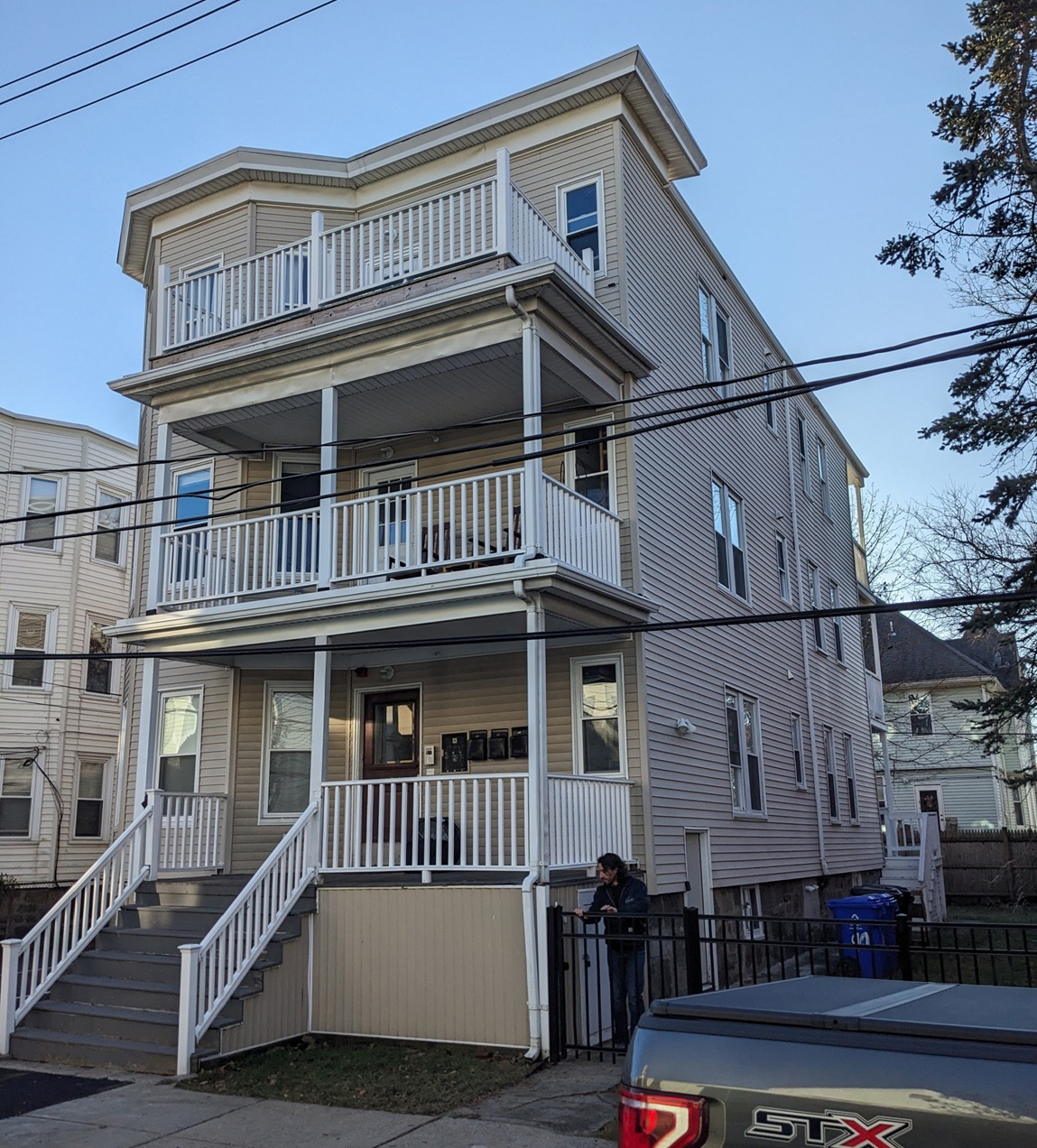
Participant Story
Read about Joshua's triple decker retrofit in Allston, Massachusetts.
Program Accomplishments

Built upon Triple Decker Design Challenge
Used the results of the Challenge to provide homeowners with the direct benefits of successful clean energy retrofits

Retrofit 60 units
Helped provide 60 households across 19 triple decker buildings with more comfortable, energy-efficient homes

Advanced future all-electric retrofits
Provided experience, examples, and data to rapidly scale all-electric retrofits of triple deckers
Programmatic Details
Market-Rate
$700,000 awarded
Project sites were required to be typical New England triple deckers, defined as detached three-story, multi-family, wood-frame buildings, consisting of three units with similar floor plans, built before 1970.
Affordable Housing
$1,400,00 awarded
Eligible applicants were required to be the owner of a triple decker that met one of several criteria to demonstrate that it was affordable housing, as detailed in the following Program Manual.