
The world is installing vast amounts of solar power, more than 605 gigawatts of new capacity in 2025, according to the International Energy Agency, equivalent to more than a billion solar panels. To reach long-term climate goals, that pace will need to continue, especially as electricity demand rises from electric vehicles, AI, and the electrification of heating and cooling.
Fortunately, solar has become one of the fastest and most affordable ways to generate more energy. Solar panel costs have fallen dramatically, about 90% in the last decade (Our World in Data), as manufacturers become more efficient through new technology and growing scale. As a result, construction now makes up more of the cost of solar power, creating a need for more efficient installation methods that can help keep power prices down.
Installing solar panels is often hard, repetitive work in remote locations, and the challenge is growing as panels become larger and heavier. The industry is also facing a workforce bottleneck, with 86% of solar employers reporting difficulty hiring, according to the 2025 U.S. Energy & Employment Report. To keep solar growing, the industry needs new tools that can improve productivity, reduce costs, and make installation safer for workers.
Luminous Robotics, a Boston-based startup, is rising to this challenge, helping to remove bottlenecks in solar construction with a flexible approach to automation that fits today's workforce.
Putting Robotics to Work in the Field
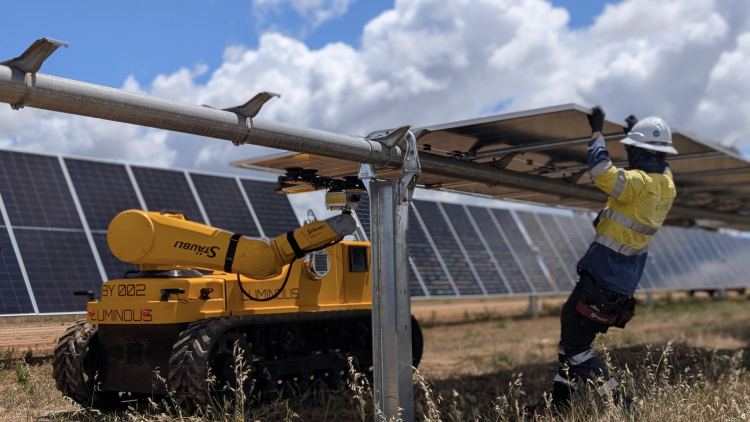
Luminous’ robotic platform combines advances in computer vision, AI, grasping hardware, and fleet management software. The company brings its tracked robots to solar construction sites, where they work alongside crews to handle heavy and repetitive tasks like moving pallets of solar panels and placing them onto racking. This helps workers build solar farms faster, more safely, and at lower cost.
Robotic installation can also reduce the rates of micro-cracks and defects that can affect panel performance over time, while collecting rich data to guide ongoing operations and maintenance of the farms.
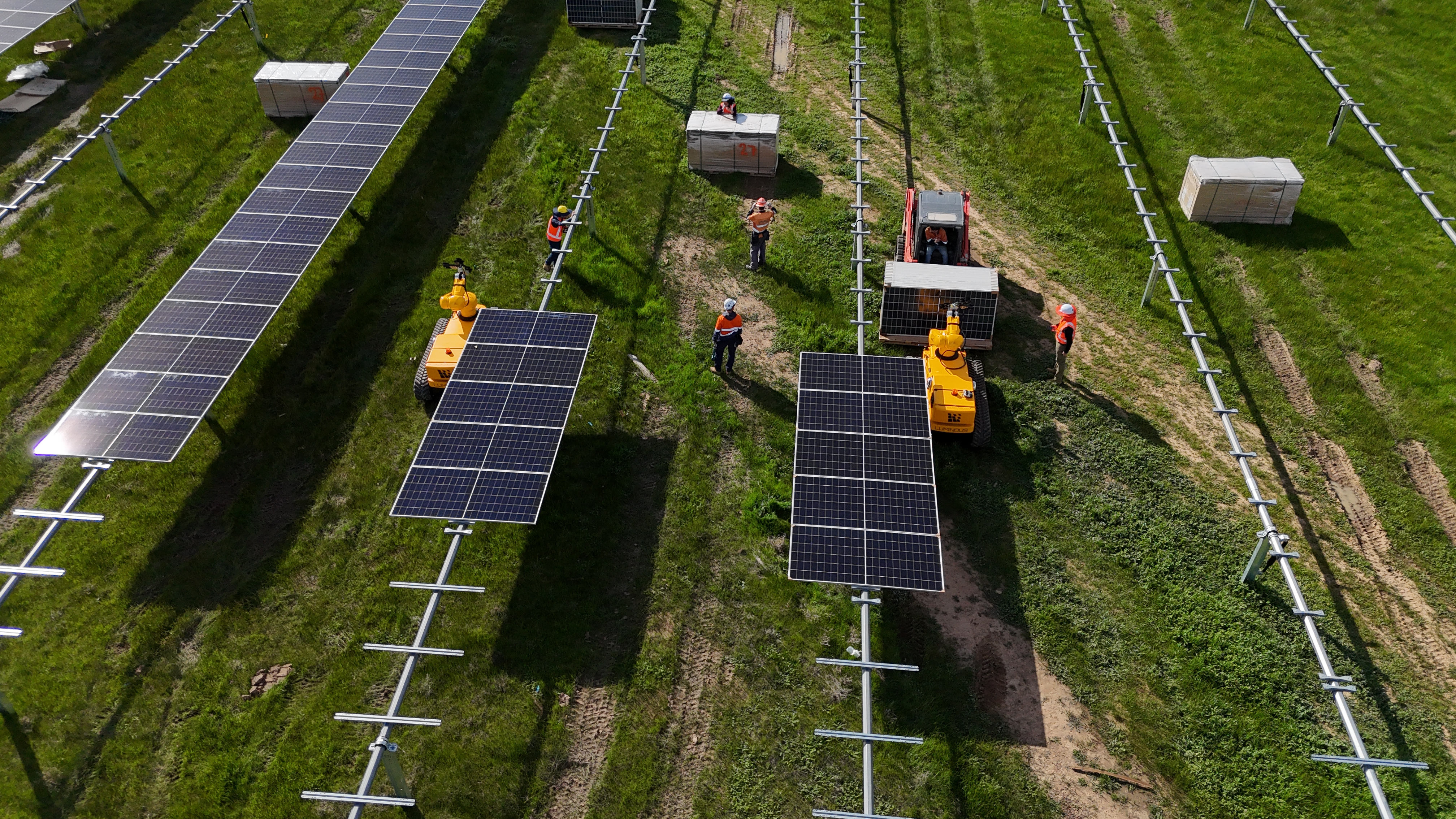
An important feature of Luminous’ approach is ease of use. The robots fit into existing human workflows and adapt to different kinds of panels, racking, and terrain. They work as well on small community solar farms as on giant utility-scale projects, and are designed for straightforward adoption by today’s developers, construction companies, and workforce.
Following successful pilots, Luminous is now taking on commercial projects and poised for growth.
“The next era of solar will depend not only on better technology, but on our ability to build at the velocity the energy transition requires,” said Jay M. Wong, CEO of Luminous Robotics. “And precisely that, Luminous is focused on the intersection of industrial automation and lean process optimization to scale robotics into the field and empower crews to construct utility-scale solar faster, safer, and with fewer bottlenecks to bring clean energy to more communities, faster.”
From Early Investment to Field Deployment
Luminous has made rapid progress since its founding at MassRobotics in late 2023, developing successively more capable prototypes and testing them with customers on solar construction sites. Mass Clean Energy Center was an early investor in the company, alongside LMNT Ventures, the Clean Energy Venture Group, and other backers.
Luminous has since drawn on our InnovateMass and CriticalMass programs to support pilot projects with leading solar developer Nexamp, including a site in Russell, Massachusetts, that will be one of the first in the world to have all its panels installed robotically.
This support reflects MassCEC’s role in helping Massachusetts climatetech companies move from early technology development to real-world deployment, bringing new solutions into the field where they can reduce costs, support workers, and accelerate communities to cleaner, more affordable energy.
Building Momentum Beyond the First Sites
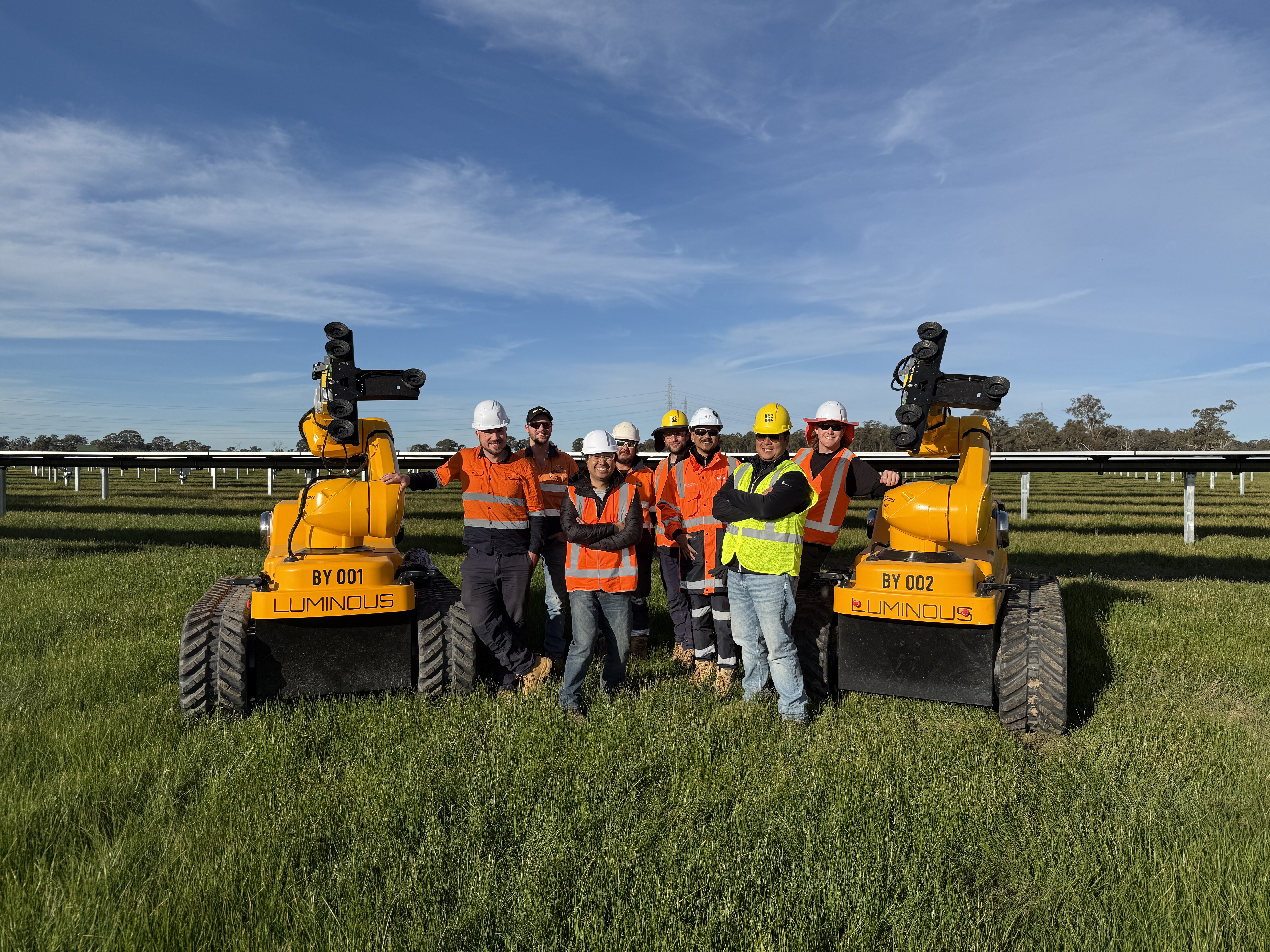
Last year, Luminous won a major grant from the Australian Renewable Energy Agency (ARENA) to deploy fleets of robots on utility-scale solar farms in Australia, as the inaugural project out of ARENA’s $100 million Solar ScaleUp program. It recently announced a partnership with fellow Massachusetts solar technology company Raptor Maps to deliver integrated construction, operations, and maintenance systems for utility-scale solar.
Growth plans for 2026 and beyond include further partnerships in the solar supply chain, deployment on major U.S. construction sites, and expansion into other aspects of solar plant construction beyond panel installation.
The company is now pursuing national and global impact from its headquarters in South Boston, where it carries out R&D, assembles its robots, and employs approximately 25 staff.
By helping crews build solar projects faster, more safely, and more efficiently, Luminous Robotics is showing how automation can support the clean energy workforce while accelerating the deployment of renewable energy at the scale needed to meet rising demand.
For the latest news from Luminous Robotics, check out their website and Linkedin page. To learn more about Mass Clean Energy Center’s cutting-edge portfolio companies, visit the MassCEC Investments page.