
Last winter, MassCEC called on organizations across the state to help shape a Massachusetts Climate Service Corps (CSC) dedicated to preparing young people ages 18–24 for energy efficiency and clean heating and cooling careers.
Launching the First Climate Service Corps Cohort
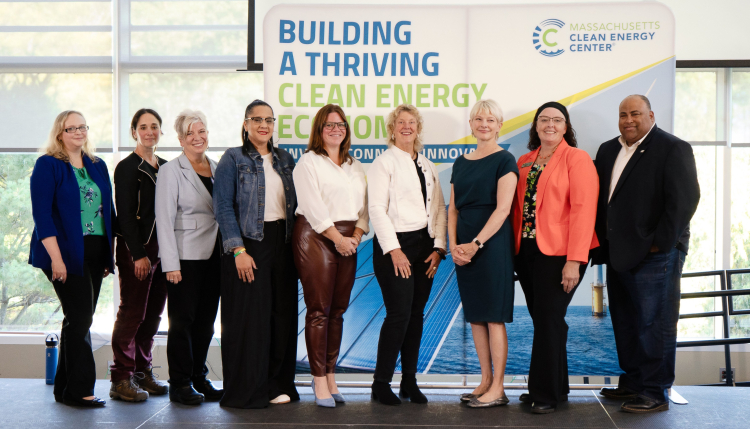
On September 26, the inaugural group of grantees gathered to announce nearly $850,000 in funding and officially launch the program and celebrate a shared commitment to building a more resilient and equitable future. Each organization brings a unique perspective on why this work matters, and how local engagement, hands-on service, and training opportunities can empower young people to drive climate action and economic development in their own communities.
The Healey-Driscoll Administration first signaled its interest in a statewide Climate Service Corps in Climate Chief Melissa Hoffer’s recommendations released in 2023. That same year, MassCEC published its Workforce Needs Assessment, which estimated that Massachusetts will need to expand its clean energy workforce by tens of thousands of jobs to keep its clean energy transition on track. Developing a learning initiative tailored to young adults—one that acknowledges their unique experiences and competencies while offering opportunities for development and professional growth—is an essential component of our strategy to build a diverse, skilled clean energy workforce.
Local Leaders Stepping Up: Community-Rooted Programs
For Greenfield Community College’s Director of Strategic Innovation, Samantha Wood, this concept rang like a bell. “GCC and Western Mass [have] decades of environmental activism and strong community commitment to responding to climate change,” said Wood. This history of grassroots work has inspired their CSC program, which will focus on energy efficiency and building science occupations for students in Franklin and Hampshire Counties.
“The clean energy economy is growing fast—and so are the opportunities for well-paying, meaningful work,” said GCC Vice President of Workforce Development Kristin Cole.
The MassCEC-funded corps will be spread across the state and prioritize young people from environmental justice neighborhoods, low-income communities, federally recognized or state-acknowledged tribes, and current or former workers from the fossil fuel industry.
At a time when national climate initiatives are being dismantled, Massachusetts is doubling down, showcasing a declaration that a clean energy future must include everyone, regardless of their background. Dan Rivera, the former Mayor of Lawrence who now leads Coalition for a Better Acre (CBA), said, “Washington may be backing away from its commitment to fight the [climate and housing] crises, but Massachusetts, and frankly, the builders are not, [as] they continue to invest in homes, [which] means the job market for these graduates has a long life.” CBA will use a CSC grant to focus on a sustainable building corps in Lowell.
Another grantee, Worcester Community Action Council (WCAC), expressed that this opportunity came as a chance to combine their missions of lowering energy costs for families and helping young people find jobs. “We see this new opportunity as a way to leverage our youth employment expertise and expand into sector-based work that can provide a workforce to our energy service contractors and partners in the community, while also exposing youth to a new career pathway,” said WCAC CEO Marybeth Campbell.
Besides GCC, CBA, and WCAC, Power Corps Boston will also be strengthening their Green Industry Workforce Program. This 10-month program offers a foundation of workforce readiness and networking before offering participants multiple career tracks to explore in depth. Programs like these are not happening in isolation. City governments, schools, and career organizations will be joining these awardees to help develop these pathways.

Removing Barriers and Supporting Participant Success
Each CSC will be designed with its community in mind—bringing sustainable building operations training to both Lowell and Boston and expanding energy efficiency opportunities in both Central and Western Massachusetts. While these programs will teach different skills across the state, they will all focus on workplace readiness, career coaching, and addressing the barriers that participants face during the training and application process.
But these differences will help allow CSC leaders to best tailor their activities to issues unique to their communities. “Looking for a job at a time when the skills for those in-demand jobs changed or are changing rapidly can be demoralizing. Add to that, the barriers to jobs that come with language difficulties, food insecurity, housing insecurity, generational poverty, and job search for Acre neighborhood families can be very, very difficult,” said Rivera.
Acknowledging these barriers is crucial to best ensure that beyond job skills, students come away prepared for all aspects of a career, which is why these CSC organizations are also including case management, wraparound services, and other support systems to ensure that students can devote the time needed to the program and be set up for success.
“We hope that participants in our Climate Service Corps will graduate with a fist full of certifications and hands-on training in making affordable housing more energy efficient, but we want them to go into the workforce with a foundation of the new work place and a high level of resiliency, adaptability, and self-esteem that as the workplace needs change they can adapt,” said Rivera.
Building Careers, Community Resilience, and a Climate-Ready Future
Beyond job training, these organizations hope to allow young people to engage in ways they can support their communities through the climate crisis without having to sacrifice their livelihood. This is not just a chance to start a career, but to invest in their neighbors and make their communities stronger while being a part of the solution.
“We are hopeful that we are not only exposing youth to high quality careers and job opportunity, while creating a skilled talent pipeline for our local energy contractors, but we are [also] very hopeful that our participants and partners will see this as a great opportunity to be part of a community-wide effort that will have a lasting impact on community resiliency and sustainability,” said Campbell.
For all participants, building the climate-ready workforce of Massachusetts is crucial, and serves as a promise to young people that they have a place in the future of clean energy. “Meeting the challenge of helping to train the workforce, and provid[ing] good jobs for people in our region, is a collaboration across our workforce ecosystem. The Western Mass economy writ large – truly our neighbors, our families, our children, and our future – depends on this workforce,” said Wood.
Want to help young people in your region access clean energy careers? Learn more about the Climate Service Corps. New funding opportunities launch in December 2025.