
What is Upfront Carbon?

Every building is responsible for two main types of carbon emissions: operational carbon and upfront carbon. Operational carbon emissions come from the energy used to operate a building after it’s built. Upfront carbon emissions, or embodied carbon, includes the emissions created from harvesting materials, manufacturing, transportation, installation, maintenance, and construction of a building.
The Carbon Leadership Forum Boston estimates that the upfront carbon from new building will be responsible for almost half of the carbon emissions of all new construction buildings between now and 2050. Unlike operational carbon, there is no opportunity to decrease embodied carbon with updates in efficiency after the building is constructed.
It is crucial for building professionals and policymakers to account for both operational and upfront carbon emissions to fully address the carbon footprint of buildings, however, in Massachusetts, existing building-related climate policies have primarily focused solely on operational carbon.
The first step in creating holistic approaches that address the upfront carbon of building materials is to collect data on the range of construction materials and their associated emissions.
MassCEC Advances Holistic Carbon Assessments
MassCEC provided a $200,000 grant to the Northeast Home Energy Rating System Alliance (NEHERS), a non-profit trade group, to integrate HERS rating software for new homes with the Building Emissions Accounting for Materials (BEAM) tool. This integration enables HERS® Raters to collect a small amount of additional information from building plans so that each home can receive both 1) a HERS operational energy score and 2) an embodied carbon score measuring the upfront embodied emissions, without any additional site visits.
The grant also supported a partnership between NEHERS, Stephens & Company, Ekotrope, Builders for Climate Action, and NMR Group, to train participating HERS® Raters and document the upfront embodied carbon emissions of 100 new Massachusetts homes. By demonstrating that embodied carbon analysis can be combined with a typical operational energy assessment, the study illustrates a scalable and practical pathway to more holistic carbon accounting in residential construction.
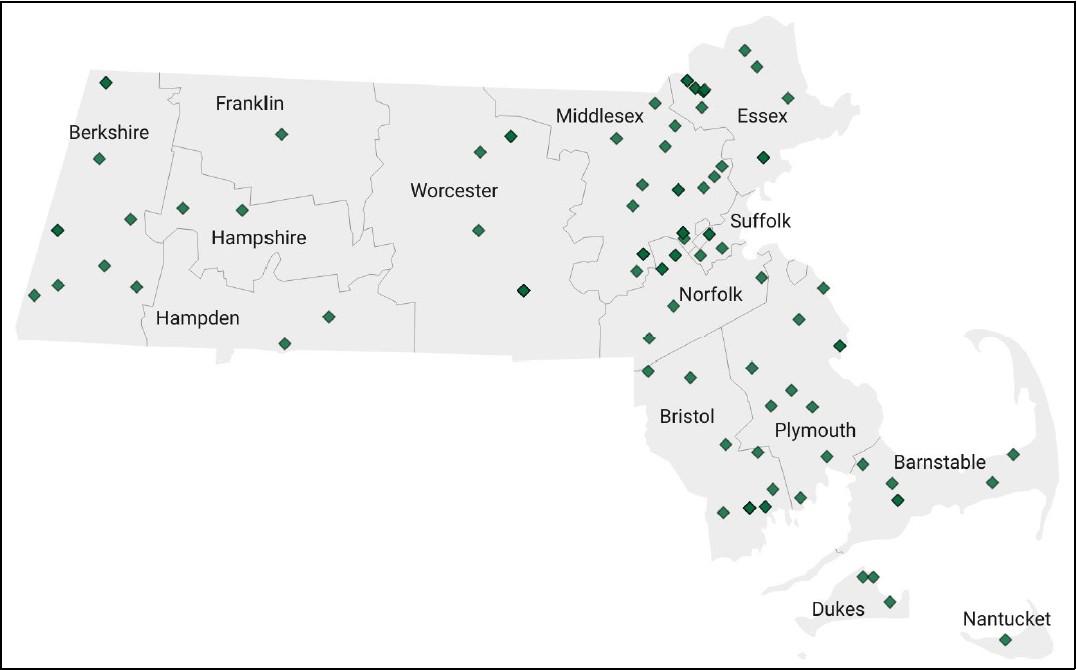
The resulting dataset will help policymakers and design professionals better understand the embodied carbon profile of Massachusetts homes, hot spot building materials, and inform future policies aimed at reducing upfront emissions.

The Massachusetts 100-Home Embodied Carbon Study includes:
- Study methodology and BEAM integration
- Mechanical, Electrical, and Plumbing (MEP) embodied carbon—the first study known to include MEP components
- Embodied carbon quantities, including emissions by home type, material contributions, and embodied carbon intensity
- Carbon emissions and intensity forecasts
- Insights from participating HERS® Raters