
Most of us don’t think about testing when we turn on a light switch or drive across a bridge. We assume the systems we rely on every day have already been proven safe and reliable—and most of the time, they have.
But that confidence doesn’t happen by accident. It’s built through careful testing by engineers and technicians asking hard questions before new technologies are used in the real world: What happens under heavy loads? How does a structure respond to harsh weather, repeated use, or unexpected stress? What needs to be improved before it can be trusted at scale? For clean energy, that kind of proof is essential. New technologies must earn trust with communities, regulators, investors, manufacturers, and the people who depend on the grid every day. Testing is how we move from promising designs on paper to real-world performance we can stand behind, turning uncertainty into evidence.
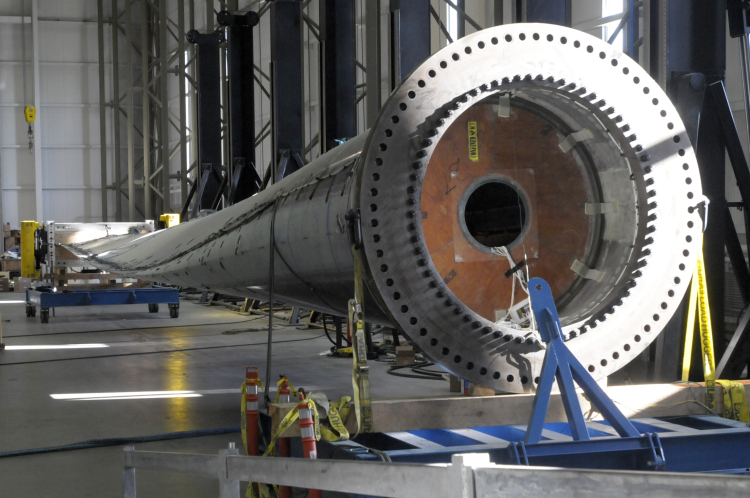
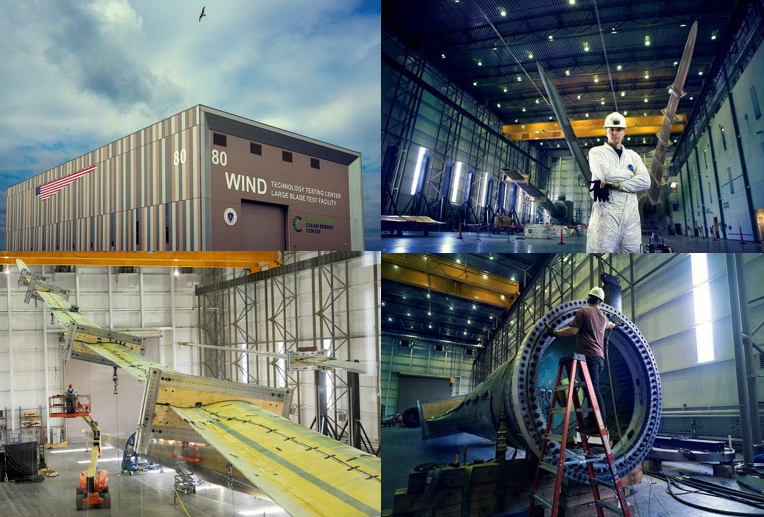
That is the role of Mass Clean Energy Center’s Wind Technology Testing Center (WTTC). By testing wind turbine blades and other large structures at full scale, the WTTC helps manufacturers validate designs, support certification, reduce risk, and bring cleaner energy technologies to market with greater confidence.
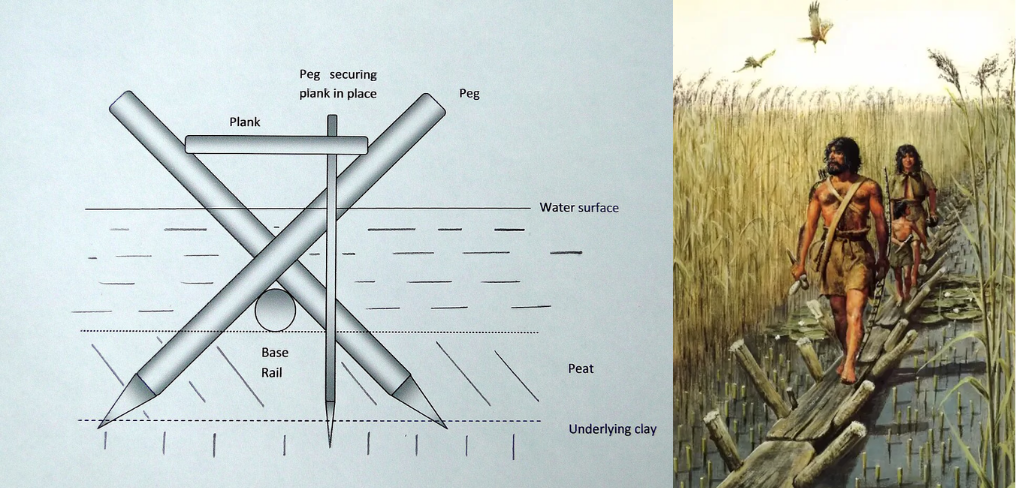
Why the single vertical peg and two cross pegs? Why the base rail? No written records survive, but let's put on our imagination hats for a minute. When you look at a floating plank on a marsh, it’s easy to imagine that each part was added after someone tried to walk across it and found a weakness. Each failure created a new problem to solve, and each adjustment brought the structure closer to working. This is testing.
Testing things before we use them is not just engineering fundamentals; it is innately human. Whether it’s the ice on the pond, a hot tea kettle, or a boardwalk, we want to understand the condition of something before we commit our full weight, trust, or attention to it.
Think about a tea kettle on the stove: most people don’t grab the metal body right away. They approach cautiously, watching for steam, and listening for the rising sound that suggests it’s boiling. They might hover a hand nearby to feel the heat radiating off the surface or touch the handle first because it’s designed to be safer than the sides.
Modern engineering applies the same instinct with far greater precision. Instead of relying on quick judgment, engineers use controlled tests, data, and repeated measurement to understand how materials, components, and full systems will perform over time.
What Testing Looks Like Today
Today, all structures and products we use are expected to be tested thoroughly and transparently before they are deployed. But testing is not a single step. It can include controlled lab experiments, component- and system-level trials, and full-scale demonstrations that replicate real operating conditions.
Each stage reduces a different kind of risk: whether the materials behave as predicted, whether parts work together as intended, and whether a complete system can perform safely and reliability over time.
A useful way to understand testing is as a pyramid of risk reduction. Early tests are smaller, faster, and less expensive. Later tests are fewer, more complex, and closer to real-world deployment. For large infrastructure—like wind turbines and their blades—this typically includes:
-
Lab and material testing uses small samples to assess strength, stiffness, durability, fatigue, aging, and environmental performance. This helps confirm basic material properties and improve design models.
-
Component and subsystem testing examines parts such as joints, bondlines, spar caps, root inserts, sensors, and controls. This shows how pieces interact and where manufacturing or interface issues may create risk.
-
Full-scale structural testing tests a complete blade, tower section, or foundation element under realistic static and repeated loads. This confirms whether the structure meets performance and certification requirements at scale.
-
In-situ or field trials evaluate the technology in real operating conditions, including wind, turbulence, temperature, corrosion, installation, and site-specific constraints.
-
Monitoring and feedback use inspections, sensors, condition monitoring, or digital tools after deployment to detect issues early and feed lessons back into future designs.
In practice, this pyramid is how the industry earns confidence. Rather than moving an unproven design straight into deployment, testing creates evidence step by step, reducing risk before a technology reaches the field.
Without rigorous testing, problems stay hidden until the product is deployed. Loads, weather, and repeated use can trigger unexpected failures, leading to lower quality, reduced reliability, higher maintenance costs, delays, recalls, and reduced public trust.
Ultimately, modern testing is about turning uncertainty into evidence that creates a clear chain of proof from materials to components to full-scale structures and, finally, performance in the field. This makes designs safer, more reliable, and easier to certify, while helping manufacturers innovate with confidence. For technologies like wind turbine blades, specialized facilities are essential because full-scale testing requires the space, equipment, and expertise to replicate the forces a blade will face over decades of operation.
Where Wind Turbine Blades Are Put to the Test
At the WTTC wind turbine blades are tested at full scale under controlled structural loads. In other words, we bend them (a lot!) to help manufacturers understand how blades bend, flex, and respond to the kind of forces they may experience over decades of operations.
The facility provides independent testing data that manufacturers can use to evaluate performance, refine designs, and support certification before blades are deployed commercially. The WTTC does not certify blades, and not every blade goes through the facility, but for new blade designs and other large structures, full-scale testing can play a critical role in reducing risk before deployment.
Since opening, the WTTC has tested more than 55 blades and components and has supported the wind industry as the only commercial blade structural test facility in the Americas. Blades from around the world come to Boston for testing, and our facility can also test other large structures. As onshore and offshore turbines continue to grow in size, domestic testing capacity is increasingly critical to helping the U.S. supply chain support faster product development and keep pace with industry needs.
Building Confidence Before Deployment
Testing is how promising ideas become infrastructure we can trust. From early pathways built across marshland to today’s wind turbine blades, progress depends on understanding how structures perform before we rely on them at scale.
At the WTTC, that same principle guides our work every day. By providing independent, full-scale testing capabilities, the facility helps manufacturers reduce uncertainty, reduce designs, and move new technologies closer to deployment.
As wind turbines grow larger and energy systems become more complex, the need for rigorous testing will remain essential. Continued investment in facilities like the WTTC supports innovation, strengthens the domestic supply chain, and helps ensure that clean energy projects deliver reliable power for communities.
For industry partners developing the next generation of turbine and large-structure technologies, testing is not simply a final step, it is a critical pathway to deployment.
To learn more about the Wind Technology Testing Center’s testing capabilities and collaboration opportunities, visit our Wind Technology Testing Center page.