

New England winters often bring a familiar kind of strain to the energy system. When temperatures stay low for extended periods, energy demand rises quickly. Homes and businesses need more heat, electricity use increases as people spend more time indoors, and the grid has to work harder to keep up.
This past winter, those conditions lasted longer and ran deeper than usual. Temperatures remained consistently below normal, making it one of the coldest winters the region has experienced in nearly twenty years. Several major snowstorms moved through the Northeast as well, with some areas seeing record-breaking snowfall totals.
These back-to-back events, combined with extended periods of Arctic air, kept demand elevated for longer stretches of time than normal. These conditions placed sustained pressure on the grid, with electricity demand reaching its highest level in over a decade.
A Closer Look at the Coldest Days
As a result, the grid relied more on some of its most expensive energy sources. According to a recent ISO New England report, oil-fired power plants were used more frequently, with approximately 111 million gallons burned during this period, the highest level since tracking began in 2015.
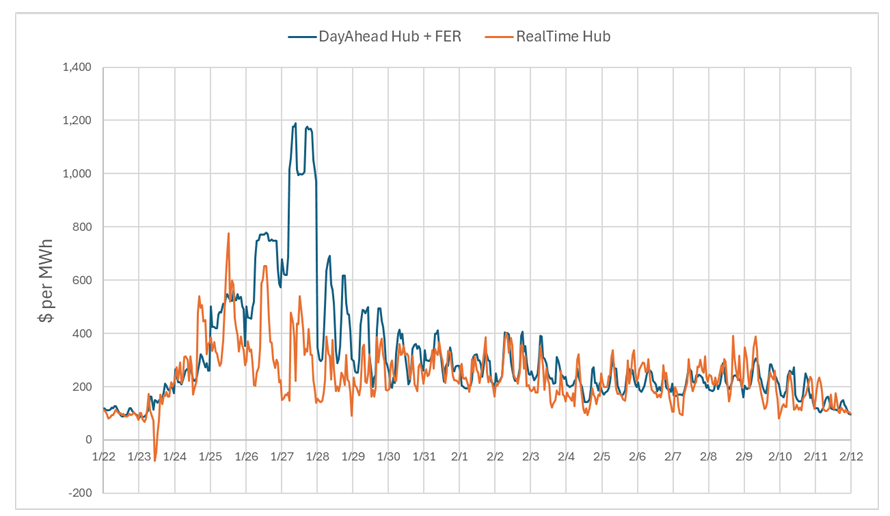
Electricity prices reflected that strain, with real-time prices averaging around $250/MWh and rising above $600/MWh on peak days. While these spikes don’t translate directly to a single utility bill, they increase the total cost of electricity over time, contributing to higher rates for households and businesses.
While New England has multiple energy sources to draw from, each comes with limitations during prolonged periods of high demand. Natural gas, a primary fuel for both electricity generation and home heating in the region, is constrained by limited pipeline capacity, making it difficult to meet increased demand during extended cold periods. Many households that rely on heating oil delivered to their homes can also face higher and more volatile costs as demand rises. Together, these factors contribute to rising energy prices.
Offshore Wind Performed When Demand Was Highest
During the same period, offshore wind and other regional wind resources were generating at strong levels. One of offshore wind’s key advantages is when it produces electricity: it tends to generate strongly during colder months, when demand is higher, making it a useful complement to other energy sources.
This winter offered a clear example of that in practice. Wind generation facilities like Vineyard Wind were producing energy at near-record levels while the grid was under pressure, supplying significant generation when it was most needed.
During the coldest days, electricity prices rose quickly as the grid relied more heavily on fuel sources that were limited, expensive, or harder to access. Offshore wind projects like Vineyard Wind, by contrast, are procured and operate under long-term contracts, with electricity prices that do not change with short-term market conditions. As market prices rise due to fuel shortages or global energy pressures, offshore wind’s fixed pricing and strong generation capacity can help reduce exposure to volatile fuel markets and support more stable electricity costs over time.
That price stability is now beginning to take shape in our state. On April 27, the Healey-Driscoll Administration announced the activation of the Vineyard Wind 1 power purchase contracts, with first-year prices of $69.50/MWh. With fixed prices over a twenty-year contract term, the project is expected to save Massachusetts customers a projected $1.4 billion in direct electricity bill savings while reducing carbon pollution by more than 1.6 million metric tons per year, the equivalent of taking 325,000 cars off the road annually or burning more than 3.7 million barrels of oil.
Building a More Reliable Energy System
As more homes and businesses switch to electric heating and transportation, demand for electricity will continue to grow. Meeting that demand requires a mix of energy sources that can perform reliably year-round.
Offshore wind is an important part of that mix, providing a reliable source of clean energy while also supporting the grid during high-demand periods and reducing reliance on fossil fuels with unpredictable prices. As more offshore wind projects come online, these benefits will continue to build, contributing to a more stable, reliable, and resilient energy system for the state.
MassCEC’s Offshore Energy work helps support this progress through programs that advance port infrastructure, workforce training, research, supply chain growth, and industry partnerships. Together, these efforts are helping build an offshore wind sector that can deliver reliable energy and strengthen the state’s energy system over the long term. You can learn more by visiting our Offshore Energy page.