
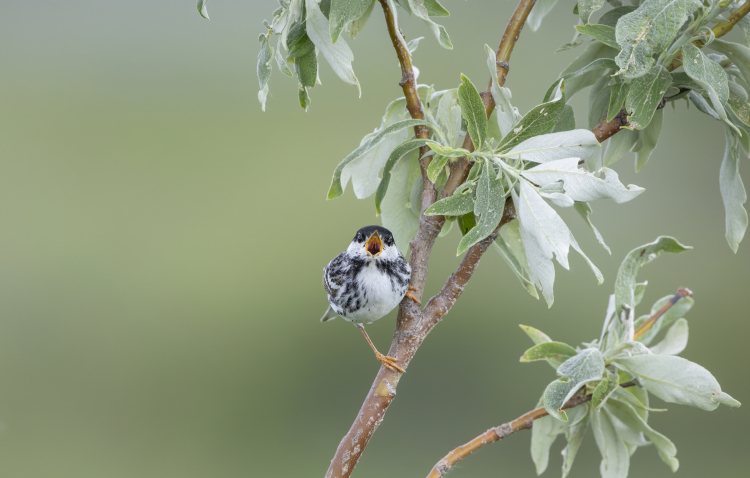
Imagine you’re a small Blackpoll Warbler – about the weight of two quarters and the size of a bar of soap – and you just completed a breeding season in Alaska. You’ve taken August and September to migrate across Canada’s vast boreal forest and you find yourself along New England’s rugged coastline. What lies ahead is daunting, at the limit of what is even physically possible for any animal on earth, let alone a tiny songbird – you’re about to fly for up to 3 straight days nonstop over the Atlantic Ocean until you reach the northern coastline of Colombia. But first you’ll spend a few weeks along New England’s coast fueling up, doubling your body mass to power your long flight ahead.
A Perilous Journey
Migration is one of the most dangerous times of year for birds. It requires significant energy and depends on intact habitat with natural areas birds can use to rest and refuel, along their routes. Birds also face added risks, such as hitting cars and buildings, flying into communication towers, being hunted by outdoor cats, and becoming disoriented by artificial light at night.
Even as birds move offshore and take advantage of reliable seasonal tailwinds toward South America, questions remain about what additional risks they may encounter along the way. The risks that offshore wind turbines in the United States present for migratory songbirds are not well understood. Do planned or constructed offshore wind farms fall within the migratory path? Does their flying altitude align with the rotor sweep of wind turbine blades?
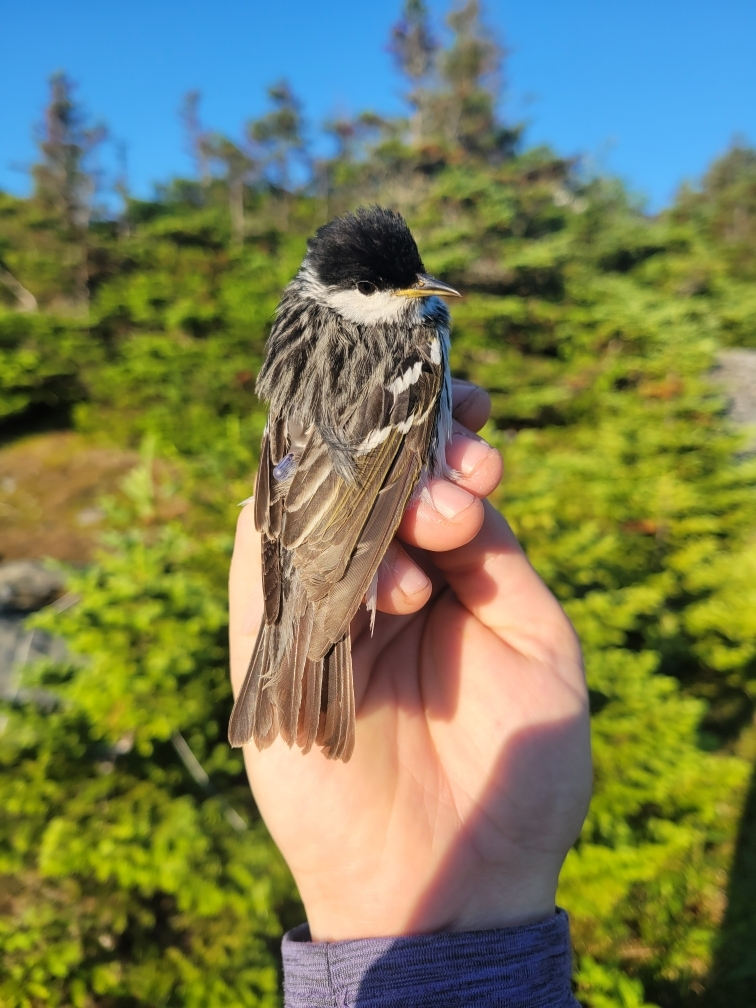
Tracking technology capable of providing accurate location and flight altitude data was, until recently, too heavy for smaller migratory birds to carry. The USGS Bird Banding Lab, responsible for permitting, allows scientists to attach tiny tracking “backpacks” that weigh just 3–5 percent of a bird’s body mass, about the equivalent of 10 grains of rice for most migratory songbirds.
Advancing Technology to New Heights
Recently, a study used barometric pressure to track the migration of the Swainson’s Warbler, a small migratory bird. This exciting new tracking technology (weighing < 0.5 grams) stores the barometric pressure the device encounters many times a day, every day for a year. Birds carry these ‘backpacks’ as they complete their epic migratory journeys that span continents. When they return to their breeding territory, the devices are recovered to reveal the valuable data stored in the ‘backpack’. Scientists can then use this data to reconstruct where that bird has been as well as hourly estimates of how high it was flying while migrating.
Putting the Technology to Work
Our project, supported by Mass Clean Energy Center, takes advantage of this new tracking technology – enabling us, for the first time, to gather in-flight information for small landbirds as they migrate offshore.
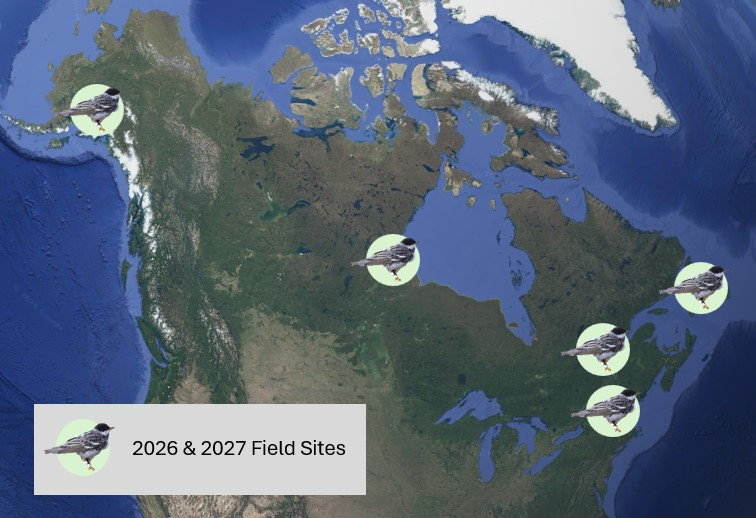
To gather this information, we will deploy over 100 barometric pressure tags on Blackpoll Warblers across their range spanning North America’s Boreal Forest, including sites in Alaska, Manitoba, Quebec, Newfoundland, and Vermont.
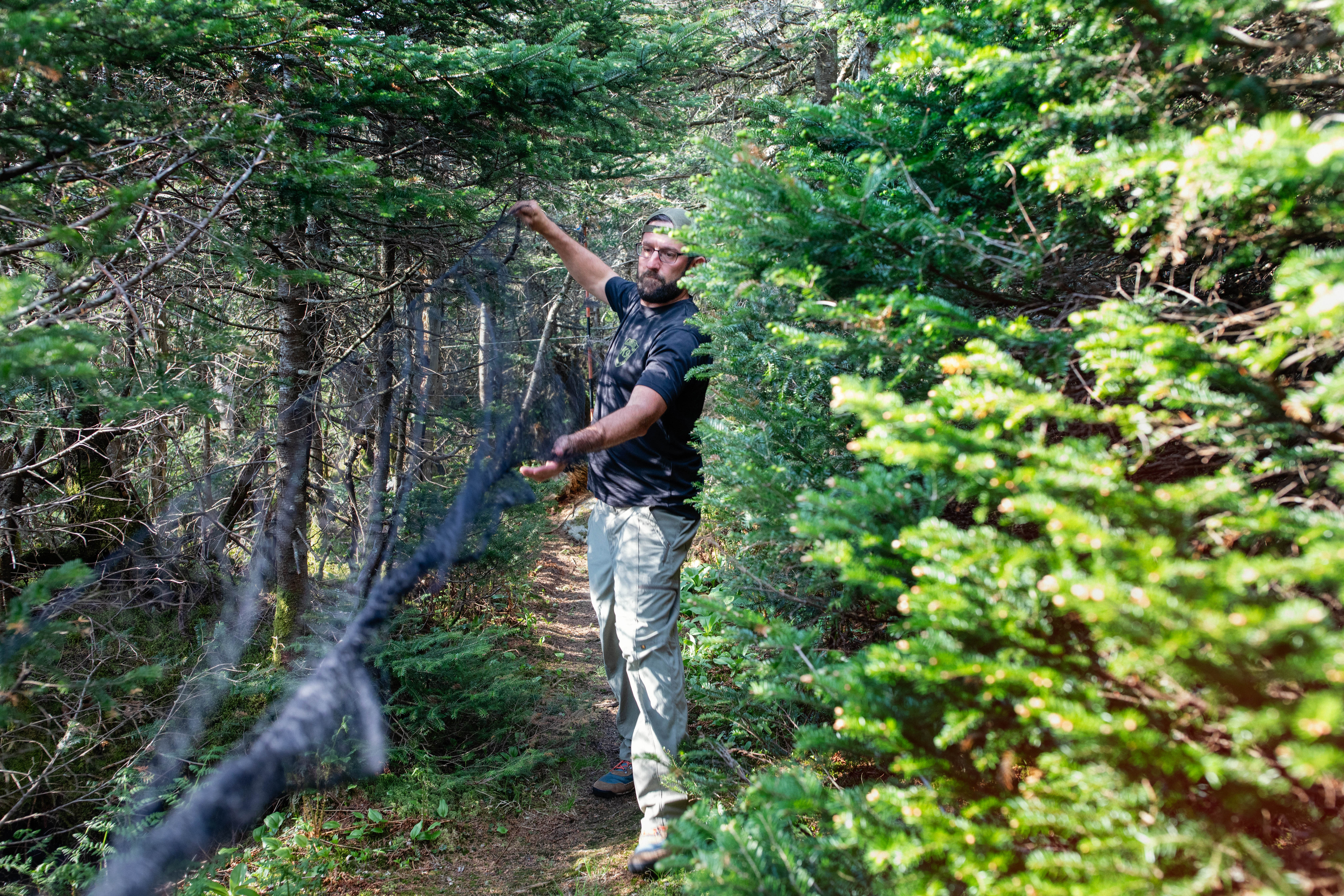
After migrating from the boreal forest to Colombia in South America and back again, Blackpolls often return to the same territories, sometimes nesting in the exact same tree, to breed the following year. At that point, we will attempt to recapture the bird and remove the backpack containing the valuable data. Once that information is in our hands, we can map specific migratory pathways and, crucially, how high birds fly while they are crossing the ocean. We will then compare those pathways and flight elevations with existing and planned offshore wind development to assess the extent to which those turbines lie in the paths of migratory songbirds.
Migratory birds are among North America’s fastest declining birds. This important project will help us better understand the extent and likelihood of Blackpoll Warblers interacting with offshore wind infrastructure as they complete their complex lifecycles. Specifically, we expect this research will inform how future offshore wind facilities are designed, sited and operated to maximize clean energy generation while reducing risks for migratory landbird populations.
The National Audubon Society and the Vermont Center for Ecostudies are leading this project, in collaboration with their partners. You can learn more about the journeys of migratory birds on the Bird Migration Explorer. Keep an eye out for updates on how tagging goes this summer and next year. After the birds return with their tracking devices, we hope to share more about their journeys.