
We New Englanders are a stubborn lot (pronounced “stuh-bahn”). We hold tight to our traditions, refuse to call bubblers “water fountains,” and stay loyal to our teams no matter how long the wait (86 years builds character, after all). Thankfully, Drake Maye isn’t making us wait nearly as long to see the Patriots reemerge as title contenders.
A bit of stubbornness or perseverance can be an asset, and for the MassCEC Offshore Energy Team, it’s part of our DNA. Offshore wind has weathered its share of challenges lately, from global inflation and supply chain disruption to federal permitting uncertainty. But like weather in New England, we know policy conditions shift, and we adjust for it and adapt as we go.
What doesn’t shift is our commitment. MassCEC continues to invest in the industry, the workforce behind it, and the science and research that make responsible offshore wind development possible.
Nils Bolgen: A Career that Shaped the Field

Call it stubborn optimism, sisu (for my fellow Finns out there), or good ol' fashioned dedication. Few embody these values more profoundly than MassCEC’s longtime Program Director, Nils Bolgen, who retired this past November after 41 years of service to the Commonwealth. Nils has been a driving force in Massachusetts’ wind sector for decades, both by land and by sea (obligatory Paul Revere reference), and was instrumental in building the scientific and academic partnerships that underpin responsible development today.
As new industries take root in a region, even those with long global track record, questions naturally arise about their potential impacts, both positive and negative. Offshore wind is no exception. MassCEC is proud to invest in the rigorous science and research needed to address these questions and views this work as foundational to the responsible development of offshore wind in the Commonwealth.
MassCEC’s science and research priorities are informed by a number of factors, including direct stakeholder engagement, the Massachusetts Habitat and Fishery Working Groups on Offshore Wind Energy, academic and government partnerships, research consortia, and industry. One of Nils’ final major contributions was the development and rollout of the 2024 Offshore Wind Science, Research, and Analysis (SRA) Solicitation, which drew more than 50 proposals and resulted in 10 funded projects totaling over $4 million in awards. Thanks in large part to Nils’ foresight and leadership, these projects will address a variety of research gaps, stakeholder concerns, and technical needs for the industry.
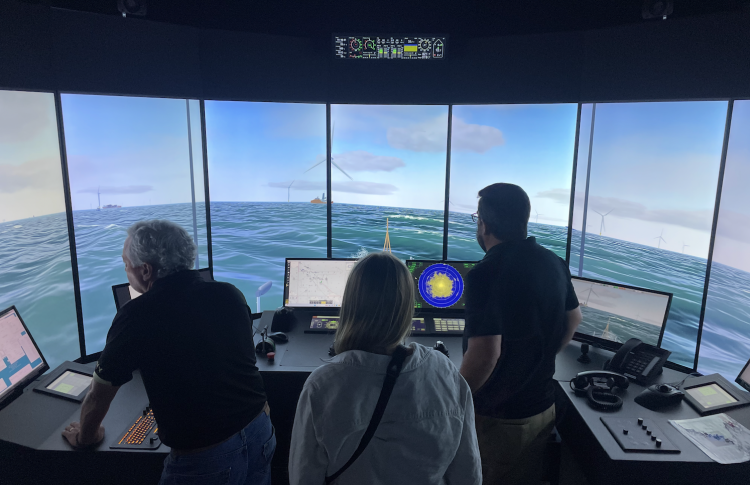
Along with my colleague, Jessica Brookner, I will be taking the reins from Nils in managing MassCEC’s SRA Program. As part of this transition, we’re launching the new Science Field Notes blog series to highlight each grantee project and keep the public informed about their progress and findings.
Our Science & Research Priorities
MassCEC’s Offshore Energy SRA Program has two primary focus areas:
- Support the responsible and inclusive development of offshore renewable energy in Southern New England and the Gulf of Maine through direct investment in science and applied research; and
- Collaborate with partners to generate, coordinate, and disseminate the best available science and research, including investments to build the capacity to conduct that research in Massachusetts.
Together, these priorities ensure that offshore wind development is informed by rigorous data, grounded in environmental stewardship, and shaped by meaningful engagement with stakeholders.
The 2024 SRA Solicitation captured both Program goals, and the first tranche of eight awarded projects reflect these priorities:
| Grantee* | Project Title | Topic Area |
|---|---|---|
| Gloucester Marine Genomics Institute (Gloucester, MA); Massachusetts Division of Marine Fisheries (New Bedford, MA) | Evaluating the Effects of Offshore Wind Development on Fisheries Using Environmental DNA (eDNA): This project expands a systematic eDNA survey conducted in 2023-2024 to include surveys in 2025-2026 to inform understanding of the impact of wind farm construction and operation on the biodiversity and distribution of important species. |
Fisheries |
| Gulf of Maine Research Institute (Portland, ME); United States Maritime Resource Center (Middletown, RI) | Understanding Fishing Interactions: Gulf of Maine Fisheries and Floating Offshore Wind: The project extends the geographic scope of an initiative to (i) engage the Gulf of Maine fishing community to understand perceived challenges associated with fishing within a floating offshore wind array, and (ii) evaluate how specific floating offshore wind designs may interact with various fishing gear types and ways of fishing. |
Fisheries |
| New Bedford Port Authority (New Bedford, MA); UMass Dartmouth (New Bedford, MA) | Modeling Fishing and Fishing Vessel Behavior and Assessing Access in and Around Wind Energy Areas: The project brings together commercial fishermen, scientists, and regulators to participate in real-world testing of fishing vessels and differing gear types within active wind areas to foster a better understanding of how fishing can be conducted within active wind areas and potentially inform the development of new fishing practices and gear modifications. |
Fisheries |
| INSPIRE Environmental (Newport, RI); Marine Biological Laboratory (Chicago, IL); Woods Hole Oceanographic Institute (Woods Hole, MA); Tufts University (Medford, MA) | Promoting Beneficial Colonization of Offshore Wind Infrastructure: By creating and deploying novel substrates containing tailored chemical micronutrients and biological seedings, the project aims to promote ecologically valuable and resilient benthic communities and deter non-native and invasive taxa. |
Habitat/Ecology |
| National Audubon Society (South Hadley, MA; Washington, DC); Vermont Center for Ecostudies (White River Junction, VT) | Safe Passage: Mapping Songbird Migration Routes and Altitudes over the Atlantic to Determine Potential Impacts of Offshore Wind: The project seeks to increase understanding of migration routes of certain song birds (Blackpoll Warbler and Swainson’s Thrush) in relation to OSW lease areas, and migration altitudes in relation to the rotor zone of wind turbines. |
Wildlife |
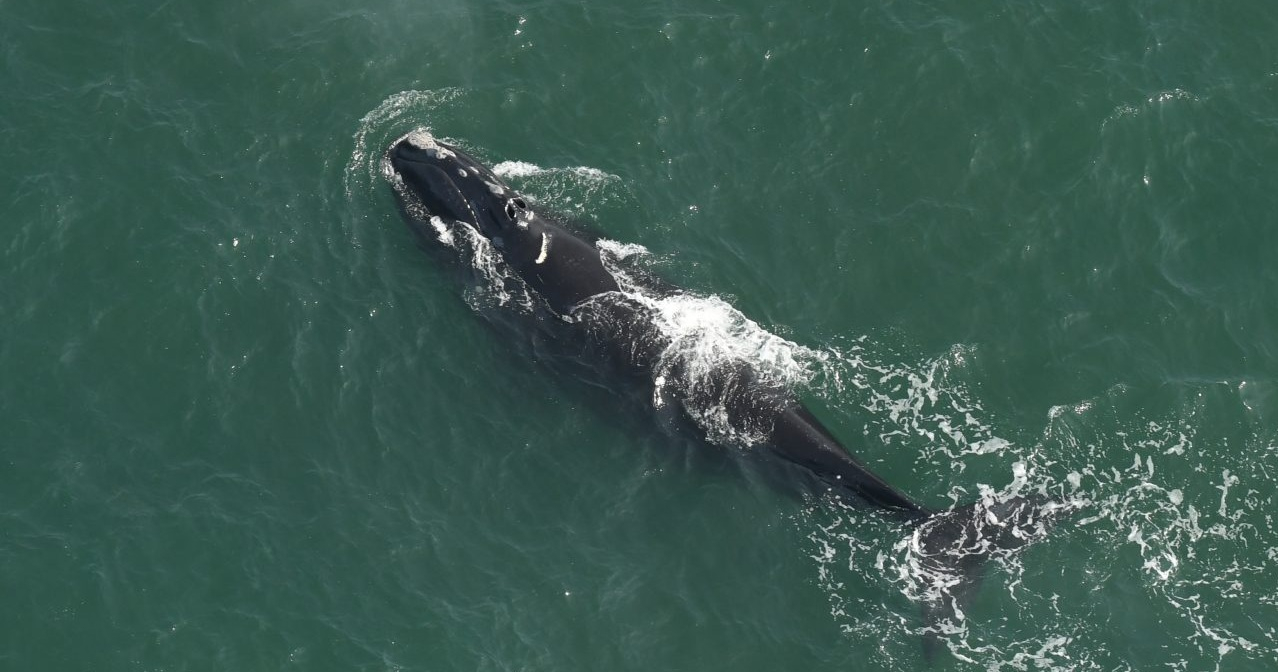
| New England Aquarium (Boston, MA) | Comparative Analysis of Marine Mammal Density and Detection Rates from Aerial Surveys: Building on MassCEC’s long-time support of protected species aerial surveys, this project will produce a retrospective comparison of density and detection probability for whale and sea turtle surveys calculated from: 1) varying survey altitudes, and 2) visual observations compared to digital photograph detections. |
Wildlife |
| University of Connecticut (Groton, CT); STEAM the Streets; Hercules, CA); Woods Hole Oceanographic Institute (Woods Hole, MA) (currently in contracting) |
Investigating the Impacts of Offshore Wind Export Cable Installation, Operation, and Maintenance on Adult and Larval Sand Lance in Stellwagen Bank National Marine Sanctuary: The goal of this project is to investigate the effects of electromagnetic fields (EMF) exposure on the development, physiology, and behaviors of sand lance. Interns from STEAM the Streets will accompany scientists on research outings and within laboratory settings, making short videos about the work, and interviewing the project's experts. |
Wildlife |
| Predyct, Inc. (Woburn, MA); ORE Catapult (Glasgow, Scotland), Northeastern University (Boston, MA) |
WINDSENSE – Wireless Intelligent Nano-Devices, a Sensor Network for Sustainable Energy: The project aims to leverage nanoengineered zero-power (NEZP) sensors to capture the lifecycle fatigue loading of offshore wind infrastructure and provide predictive insights for operations & maintenance in harsh offshore operating conditions. The Predyct team is working with MassCEC’s own Wind Technology Testing Center to measure sensor performance. |
Climatetech |
* Grantee is listed first, followed by partnering and/or subcontracted institutions.
Ocean Science Field Notes: What's Ahead
Over the coming months, we’ll share updates from each of our grantees through this new blog series. You’ll hear directly from the researchers about their methods, early findings, and questions they’re working to answer.
Most importantly, you’ll see how this body of work helps ensure offshore wind development proceeds with the best available science, with the goal to avoid and minimize any adverse impacts on marine resources, existing maritime uses, and coastal communities while maximizing benefits for the environment and Massachusetts’ economy.
We look forward to bringing you along as this work unfolds.