
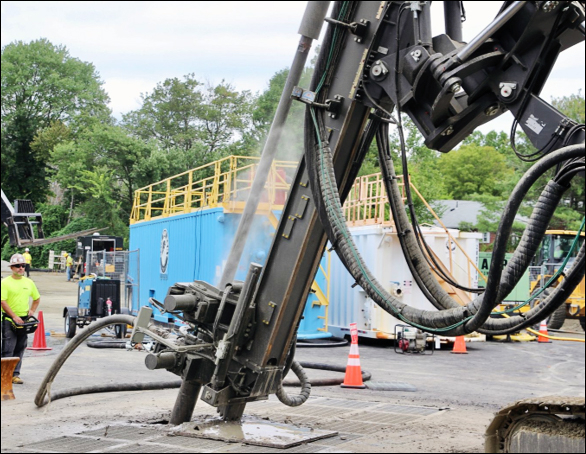
Massachusetts has a long history of leading the way—from the nation’s first public park (Boston Common, 1634) and first free public school (Mather School in Dorchester, 1639) to the first battle of the American Revolution in 1775. Now the Commonwealth is leading again—this time on clean, modern heating and cooling. In Framingham, an entire city block is being heated and cooled by the country’s first utility-led thermal energy network. It’s a glimpse of what it could look like to keep buildings comfortable without burning polluting fossil fuels.
What is a thermal energy network (TEN)?
A thermal energy network is a modern, low‑temperature district energy system. In conventional district energy systems, thermal energy is typically generated by fossil fuels and takes the form of hot water or steam that flows through a shared network of insulated pipes to multiple buildings. These systems can sometimes also deliver chilled water for cooling.

A TEN is a modern, combustion-free variant of the district energy system that, instead of using hot water or steam, moves ambient temperature water around a neighborhood. The network enables buildings to exchange thermal energy with the network and draw from connected thermal resources (including geothermal wells, waste heat from industrial facilities and data centers, sewers, surface water, and outside air) to balance the system temperature. In the winter, connected buildings extract heat from the network using electric heat pumps, raising the network’s moderate temperature to deliver heat to the building. In the summer, the heat pump rejects heat to the network, cooling the building. Because thermal energy networks run on electricity and avoid on-site combustion, they provide heating and cooling with zero on-site emissions—and as the electric grid gets cleaner over time, thermal energy networks will move towards being an emissions free heating source.
This big idea is simple: move heat to where it’s needed instead of making heat by burning fuel.
Spotlight on geothermal networks
A geothermal energy network is a type of thermal energy network that uses the ground as its main heat source and heat sink. Even when winter nights and summer afternoons feel extreme above ground, temperatures below the surface stay relatively steady (often around the mid-50s °F in Massachusetts). Wells hundreds of feet deep circulate water through that stable environment, drawing heat in the winter and sending unwanted heat back in the summer. Geothermal energy networks have emerged as a highly promising approach for combustion-free heating and cooling.
Massachusetts in the lead: Framingham geothermal energy network
The nation's first utility-led geothermal energy network broke ground in Framingham during Summer 2023. It serves an entire city block and offers customers an alternative to buying methane gas for heat.
In December 2025, the project received an additional $8.6 million grant from the U.S. Department of Energy to double the size of the system and to monitor the performance of the extended network.
In parallel, monitoring and learning are already well underway with support from Mass Clean Energy Center. Using funding from the agency’s Accelerating Decarbonization division, HEET—a nonprofit focused on an ethical and efficient thermal energy transition—is supplementing utility measurement and verification with additional research and analysis through its Learning from the Ground Up (LeGUp) initiative. Experts from the Boston University School of Public Health, Buro Happold, Eversource, Frontier Energy LTD, Lawrence Berkeley National Laboratory, MassDEP, MIT Sloan School of Management, National Grid, National Laboratory of the Rockies, Oak Ridge National Laboratory, Salem State University, Soga Research Group, the Grey Edge Group, University of California Berkeley, and MassCEC are part of the LeGUp team.
This Mass Clean Energy Center initiative also supported 11 communities to evaluate the potential for geothermal networks in their locales.
Was yours one of them? See the thermal energy network possibilities we uncovered across the state!
Clean, Efficient & Reliable: Why TENs matter
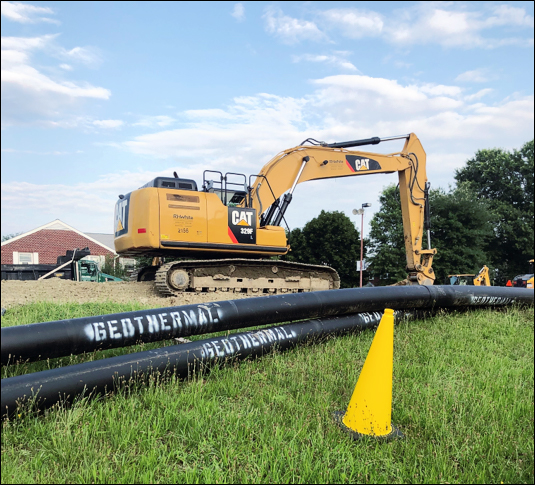
In cold-climate states like Massachusetts, building heat is a major source of pollution because combustion of natural gas and oil are still widely used. Thermal energy networks provide a pathway to replace fuel-burning systems with non-combustion, shared underground infrastructure integrated with high-efficiency electric heat pumps, designed to last for decades.
A key benefit is efficiency: geothermal heat pumps (also called ground-source heat pumps) on a thermal energy network can often deliver over five units of heat for every unit of electricity used, even during very cold weather. And because the same network can provide both heating in winter and cooling in summer, it can reduce the need for multiple systems while helping manage peak electric demand.
Just as importantly, thermal energy networks can make decarbonization feel less like a series of individual decisions—and more like something good infrastructure delivers at scale, one block (or campus, or neighborhood) at a time.
Who else is doing this?
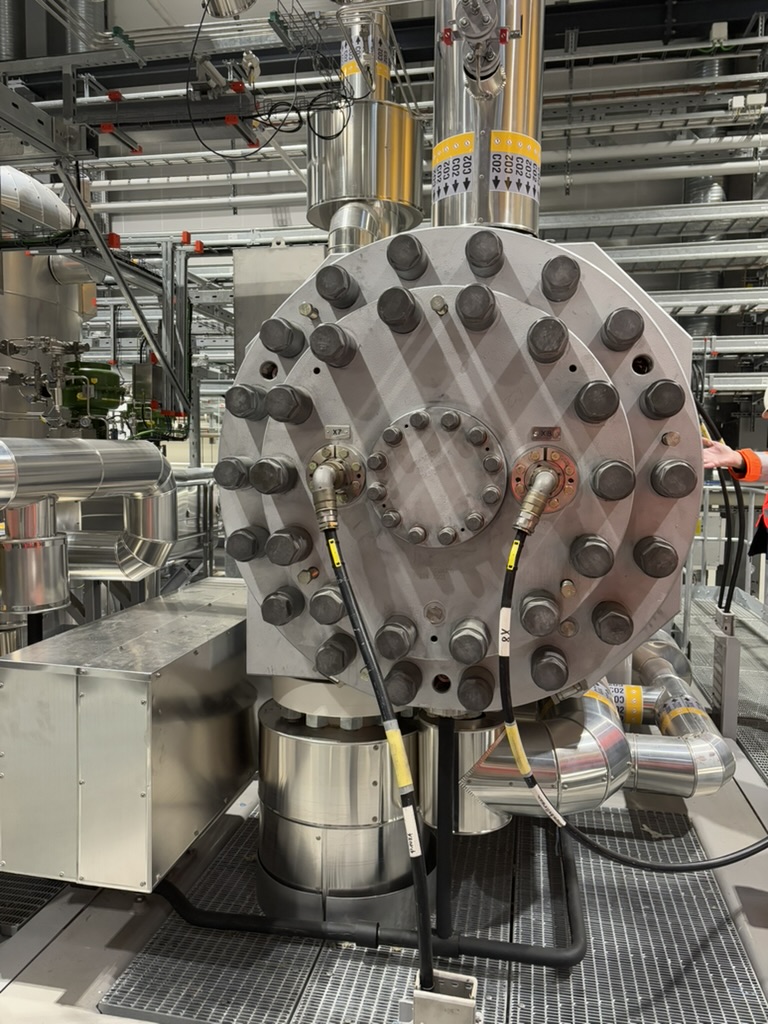
Thermal energy networks are not a new concept globally. In the United States:
- Ball State University (Indiana) operates one of the largest campus geothermal networks, spanning 731 acres.
- National Western Center (Denver, Colorado) is using sewer heat recovery to heat and cool its 250-acre grounds.
- Whisper Valley (Austin, Texas) is using a community-scale geothermal network designed to serve 7,500 homes and buildings.
In Europe, thermal networks have been deployed widely for years. One often-cited example is Heerlen, Netherlands, where a network has been operating since 2008 using flooded coal mines as a thermal resource to serve a mix of buildings across the city.
Looking ahead
Thermal energy networks transform building decarbonization into a service provided at scale — clean energy without the complexity. They give gas utilities a path to evolve from selling fossil fuel to operating shared, thermal infrastructure. Utilities can own and operate pipes that move heat (not fuel) to deliver thermal service (not molecules) and earn revenue through regulated infrastructure charges, similar to electric distribution or water utilities.
Our reliance on fuel-based heating systems exposes Massachusetts’ households, businesses, and industries to market price shocks and federal policy shifts that are difficult to plan for. In contrast, thermal energy networks don’t depend on a specific fuel that needs to be transported from elsewhere... it’s already here, under our feet. This is an energy future worth digging into!
Interested in learning more about clean energy solutions like thermal energy networks? Subscribe to our newsletters and email updates.