
The Massachusetts Housing and Climate Innovation Center (MassHCIC) was established to find solutions at the intersection of clean energy and affordable and climate-resilient housing on Cape Cod. A first-round Ocean Innovation Network (OIN) grantee, MassHCIC leverages Cape Cod’s natural and built environments as real-world testing facilities for climate and ocean technologies.
With support from OIN, MassHCIC is expanding their Innovation Opportunity Atlas, which connects municipalities with climatetech innovators.
Adèle Giovanniello, a MassHCIC Program Administrator, discussed the project, its projected impact, and MassHCIC’s involvement with OIN.
Read the interview below.
MassCEC: Can you tell us a little about your organization and mission?
Adèle Giovanniello: As a 501(c)(3) nonprofit developing housing that is climate-resilient, affordable, and net zero, our founders initially aimed to act as a startup incubator for climate and housing technology but soon realized that many startups lacked locations to pilot-test their solutions. In addition, they saw that many local municipalities were seeking new and creative solutions to climate- and housing-related challenges. By bringing these two key stakeholders together (Cape municipalities and startups), innovators can accelerate their technology while offering new, practical solutions for towns.
One example is our first partnership with Blue Planet Filtration and the Town of Barnstable. We knew cyanobacteria was a major challenge for the town, so we connected them with Blue Planet, which offers a safe, chemical-free water treatment solution. In 2024, Blue Planet successfully deployed a pilot test of its filtration technology at Barnstable’s Duck Pond.
MassCEC: What is the Innovation Opportunity Atlas, and who does it serve?
Giovanniello: The Opportunity Atlas is a database MassHCIC is developing to connect municipalities facing climate, housing, and ocean-related challenges with oceantech, climate, and housing-tech startup solutions. In this way, we can serve municipalities by offering innovative responses to challenges such as low-lying roads, water pollution, and infrastructure that is vulnerable to climate change. We also support the commercialization of oceantech, climate, and housing-tech startups that need locations to pilot their technology.
MassCEC: How will the MassCEC funding be used to support this program?
Giovanniello: The funding will support several aspects of the project. Primarily, it will fund staff who conduct outreach to oceantech startups and Cape municipalities to identify potential partnership opportunities. MassHCIC staff will also use the funding to design and develop the database.
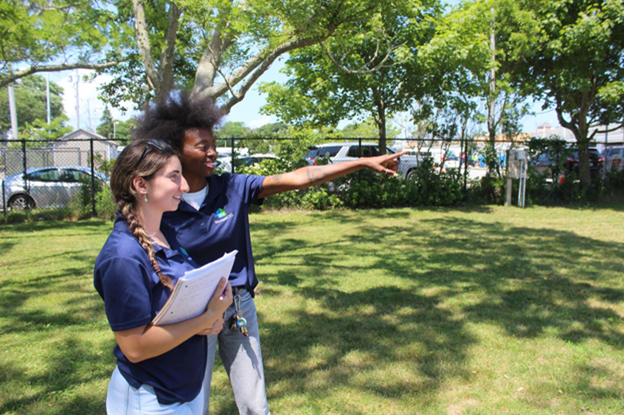
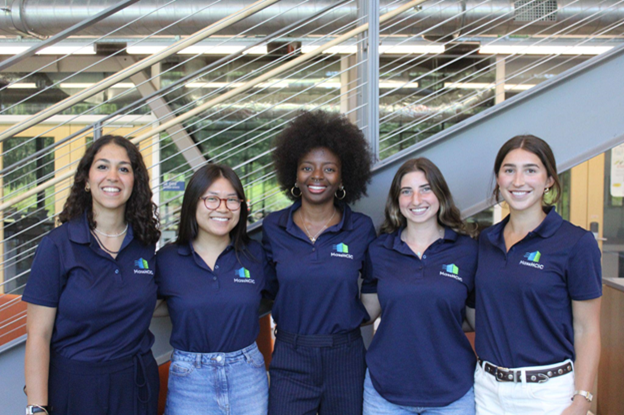
Finally, the most important feature of our database is the data we collect from towns. This is gathered through our summer internship program, which hires accomplished undergraduate and graduate students from across the country to work with Cape towns, document their built and natural assets, and engage with residents to identify challenges or needs that require creative solutions.
MassCEC: What impact do you hope to see in the next year (or beyond)?
Giovanniello: MassHCIC hopes this project will lay the groundwork for future oceantech, climate, housing, and construction-technology pilots on Cape Cod. Over the long term, MassHCIC aims to offer its services to municipalities across Massachusetts, not just on the Cape. MassHCIC envisions itself as a community builder in the fight against the housing and climate crises by creating partnerships among municipalities, private industry, nonprofits, and other stakeholders.
MassCEC: Why is this work important for Cape Cod?
Giovanniello: Cape Cod is a region that is particularly vulnerable to climate change and the coastal challenges that come with warming waters and more frequent storms. Towns across the Cape are looking for new ways to mitigate existing challenges while adopting climate-friendly practices that help them meet net-zero goals and prepare for the renewable energy transition. By creating a path for municipalities to work with emerging ocean, climate, and housing technologies, we can offer solutions to some of the most pressing challenges these communities face.
By supporting MassHCIC and the Innovation Opportunity Atlas, the Ocean Innovation Network is advancing clean energy, coastal resilience, and affordable housing in Massachusetts. Visit the Ocean Innovation Network page to learn more.