
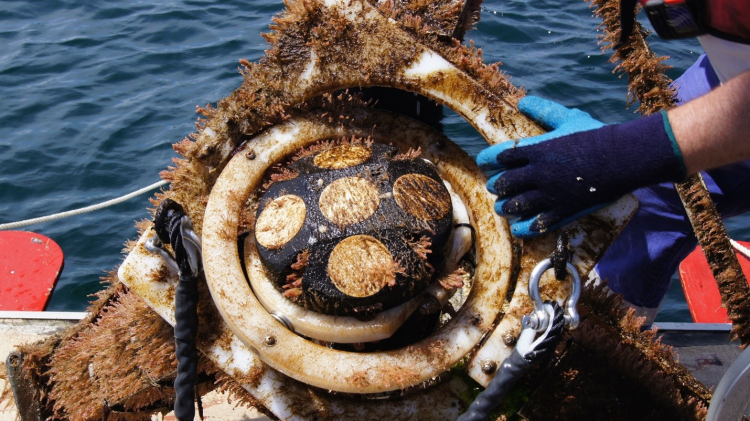
Marine Renewable Energy Collaborative (MRECo) is a non-profit driving the development of ocean-based renewable energy in New England. A first-round grantee through Mass Clean Energy Center’s Ocean Innovation Network (OIN), MRECo engages stakeholders, facilitates industry collaborations, and develops testing infrastructure.
With support from OIN, MRECo is growing its Massachusetts-based test facilities, which are crucial to the development and commercialization of ocean energy technology.
MRECo Executive Director John Miller discussed their involvement with OIN and the projected impact of upcoming projects.
Read the interview below.
MassCEC: Can you tell us a little about your organization and mission?
John Miller: The Marine Renewable Energy Collaborative (MRECo) is a non-profit dedicated to the sustainable development of ocean renewable energy, primarily tidal and wave. MRECo does this through cost effective test facilities and entrepreneurial support. The costs of permitting and deploying for ocean testing are a huge impediment to new technologies, so MRECo works to lower those costs.
MassCEC: What are the Bourne Tidal Test Site and Cuttyhunk Test Range and, and who do they serve?
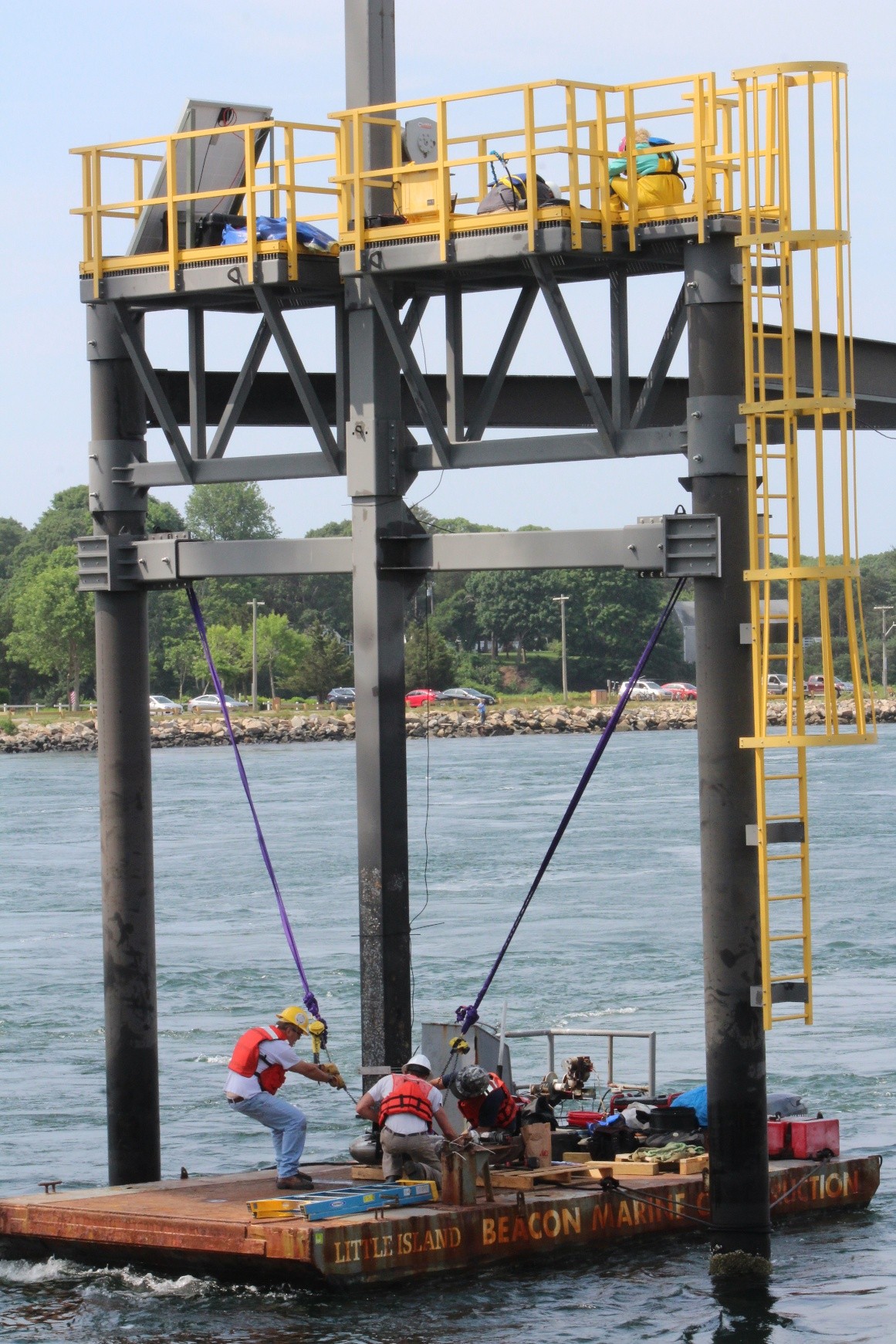
Miller: MRECo has two facilities. The Bourne Tidal Test Site (BTTS) provides a fixed platform for testing prototype tidal turbines and sensors, and the Cuttyhunk Test Range (CTR) for floating devices for wave energy conversion and sensors. These facilities support the ocean renewable energy industry, as well as developers of sensors. Sensors are critical to the Blue Economy because “you cannot manage what you cannot measure.”
MassCEC: How will the MassCEC funding be used to support this program?
Miller: Early testing at BTTS has identified operational issues that must be addressed in order to provide high quality evaluations safely. The CTR is a new site that is being instrumented to allow developers to deploy for testing quickly and at lower costs.
The original BTTS was funded with $200,00, and similar facilities have had price tags of over $10 million. With the additional $1 million invested in this program, the BTTS will have functionality making it unique in the world. CTR will make a similar cost-effective investment and together they will allow world class testing for renewable energy and sensor at lower costs, getting more technology in the water sooner for rapid commercialization.
MassCEC: Looking ahead, what impact do you hope to see in the next year or so?
Miller: These test sites have the potential to make Massachusetts a leader in Blue Technology. The intellectual capital in our universities has led the nation in the development of wind and solar technologies. However, while Massachusetts has deep research resources for ocean studies, commercialization of these technologies has often been in other states. Often this is due to research effort being led by defense spending near Navy test centers. The BTTS and CTR will reduce the cost and time to market for new blue innovations.
MassCEC: Why is this work important for our state?
Miller: Climate change is having profound effects on our world, and it makes development of renewable technologies critical. While Massachusetts has a tremendous wind resource, other forms of energy are needed here and globally. Ocean based generation, including offshore wind, because of the scale will have impacts. Developing sustainable renewable generation while also monitoring the health of our oceans is vital to our future. Massachusetts has universities that can solve these challenges, but they need to be able to test new technologies quickly. Testing conducted by the Department of Defense or universities themselves is expensive and slow. MRECo with the BTTS and CTR can provide accelerators for commercialization.
MRECo is building a path to oceantech commercialization for a cleaner, more sustainable energy system. By supporting their work, OIN is helping strengthen Massachusetts’s position as a global leader in oceantech.
Visit the Ocean Innovation Network page to learn more.