
Climate Week in Massachusetts is more than a moment, it’s a demonstration of how innovation, partnership, and real-world deployment come together to move climate solutions forward.
Across this year’s Boston Climate Week, two events captured that momentum in action: a behind-the-scenes tour of the Wind Technology Testing Center (WTTC) and ClimateTech Crossing in Downtown Boston. Together, they showcased the full spectrum of climate innovation, from highly technical validation of next-generation wind technology to public-facing demonstrations of solutions ready for scale.
At the center of it all was Mass Clean Energy Center playing a critical role in connecting ideas to impact.
Inside Innovation: Wind Technology Testing Center Tour
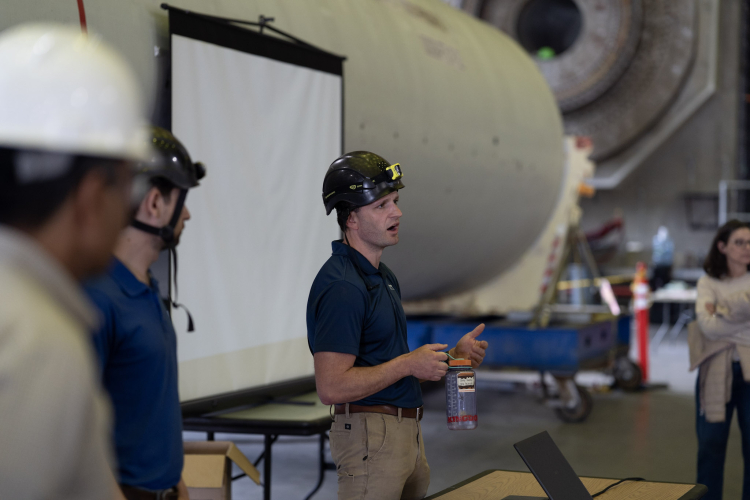
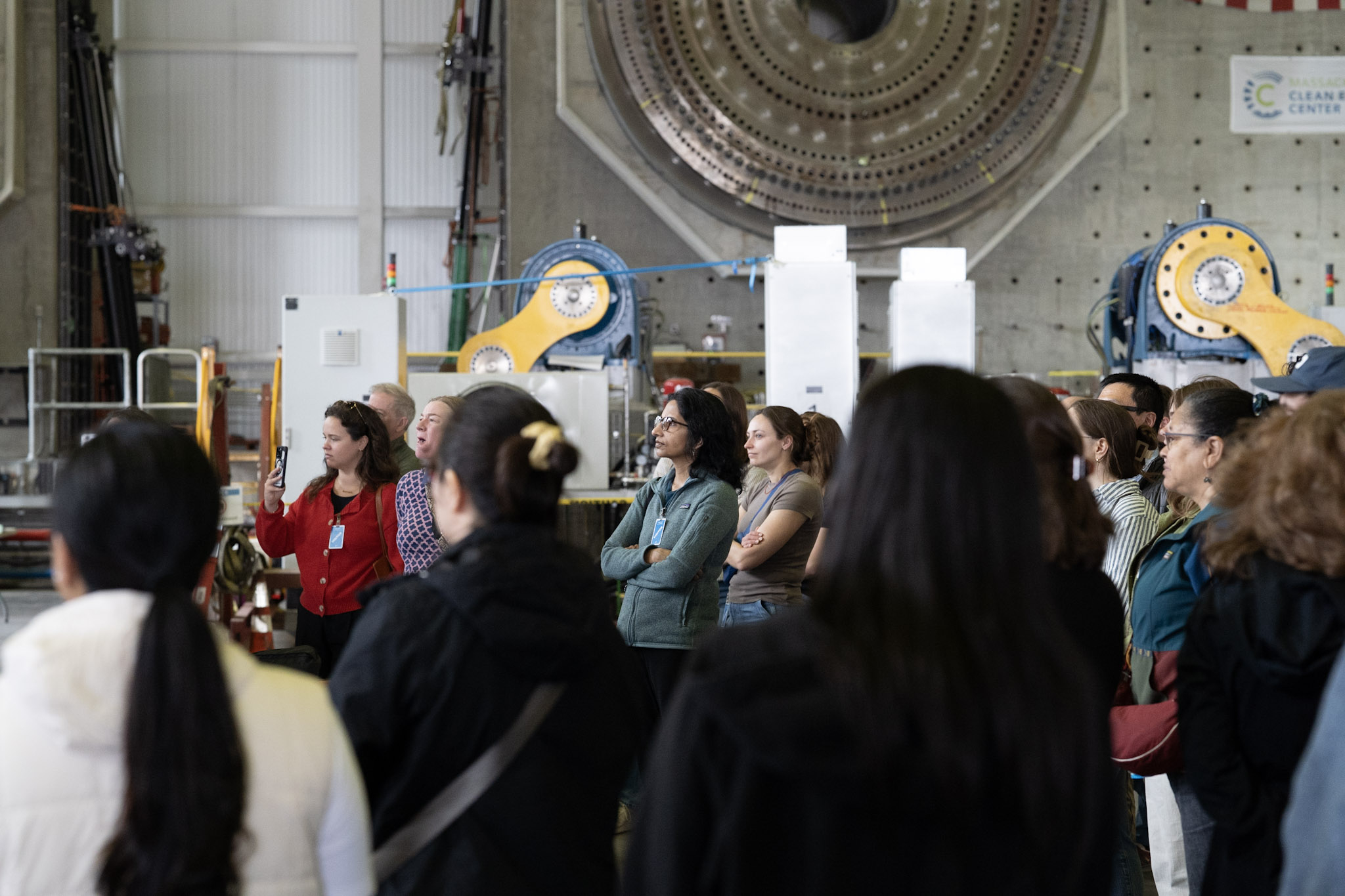
Wednesday began with a tour of the Wind Technology Testing Center, one of the most advanced blade testing facilities in the world. The tour group, representing a cross-sector mix of clean energy professionals, researchers, climate advocates, investors, business leaders, media, and public-sector partners, reflected the breadth of Massachusetts’ climate ecosystem.
Attendees traveled together from MassCEC’s office on Washington Street via an electric bus provided by Highland Electric Fleet and Doherty Garage--both MassCEC-supported partners--underscoring the state’s commitment to electrification.
At the WTTC, the focus turned to the mechanics of innovation. Participants engaged deeply with the testing process, asking detailed, technical questions about how turbine blades are stress-tested, what data is captured, and how those insights translate into more reliable, efficient offshore wind systems.
That role bridging innovation and commercialization is central to MassCEC’s mission. Facilities like WTTC ensure that Massachusetts is not just a place where ideas are developed, but where they are proven and prepared for global markets.
From Innovation to the Street: ClimateTech Crossing
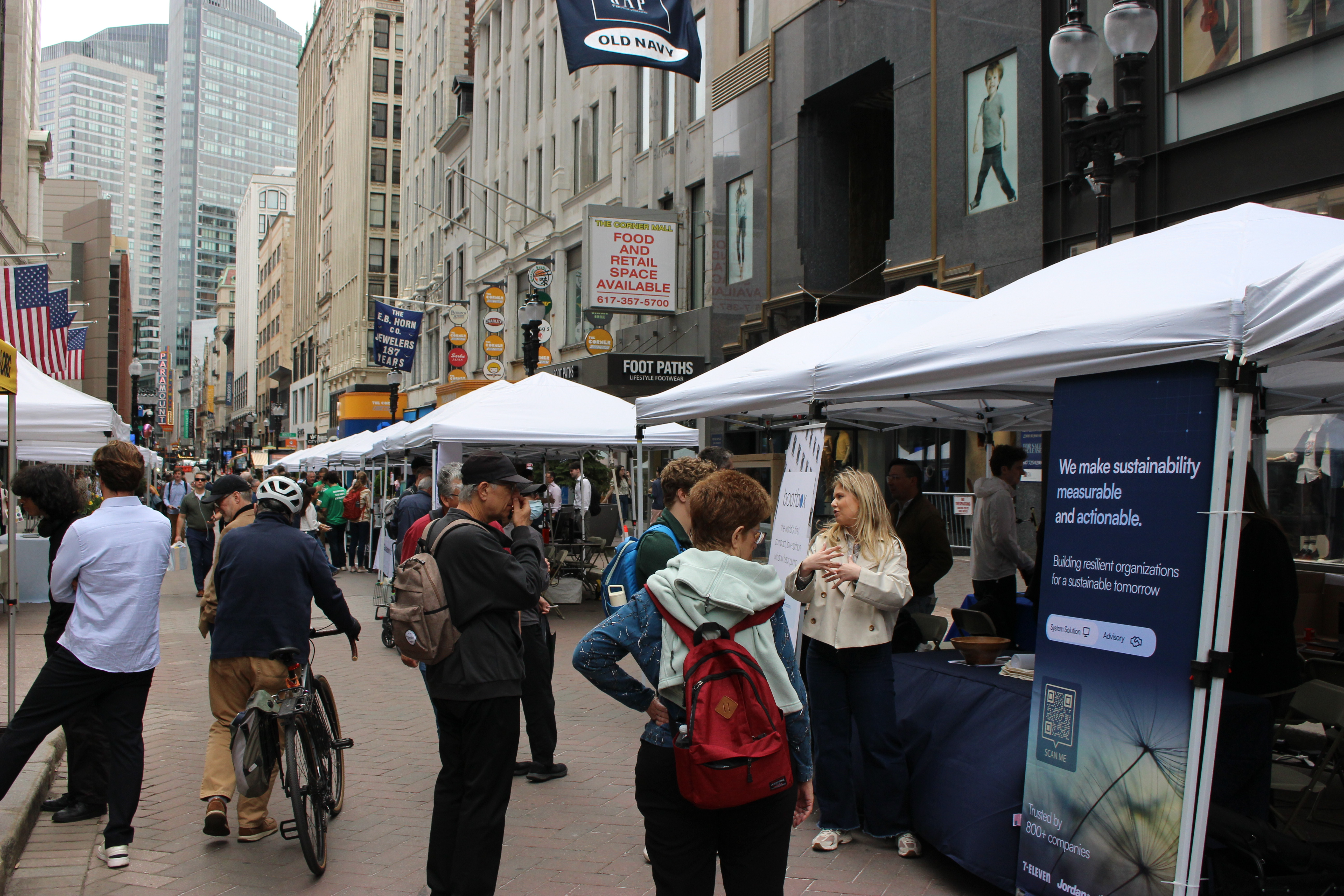
If WTTC showed how innovation is tested, ClimateTech Crossing later in the afternoon showed how it comes to life. Held in Downtown Crossing, the event brought together more than 40 climatetech companies, alongside public officials, industry leaders, and community members. The day combined a speaking program, live demonstrations, and a public block party turning the city into a living showcase of climate solutions.
The framing was intentional. ClimateTech Crossing is about shifting the conversation from early-stage innovation to deployment, addressing what many see as the industry’s biggest challenge: scaling solutions in the real world.
As MassCEC CEO Ben Downing noted during the event, “one of our biggest challenges right now is that not enough people know we already have the solutions to the problems we face.” That message was visible throughout the day. From EV charging and energy storage to advanced materials and water technologies, attendees could see and interact with solutions designed to reduce costs, improve reliability, and cut emissions.
The event also highlighted the strength of Massachusetts’ ecosystem. Tour stops and conversations included companies like Electrified Thermal Solutions, EQORE, Noble Carbon, Adept Materials, and Gamotech alongside a strong presence of Cleantech Open Northeast alumni and MassCEC-supported companies. Across these interactions, a consistent theme emerged: founders are building technologies with global potential, and they are looking for pathways to scale.
Leaders from the Healey-Driscoll Administration, including Secretary of Economic Development Eric Paley, engaged directly with companies, asking how the state can better support commercialization, workforce development, and deployment.
The Role of MassCEC: Connecting the Ecosystem
What tied these experiences together, was MassCEC’s role as a connector across the ecosystem. From funding early-stage innovation to supporting demonstration projects, from enabling infrastructure like WTTC to convening events like ClimateTech Crossing, MassCEC operates at the intersection of climate, energy, and economic development.
As Downing emphasized, the goal is not just to innovate, but to create opportunities. “We’re focused on making sure Massachusetts is delivering solutions for the world,” he said, “while creating jobs and economic opportunity here at home.
That dual mission was evident throughout Climate Week. Startups spoke about how MassCEC support helped them move from concept to pilot. Industry partners emphasized the importance of collaboration. Public leaders reinforced the need to align policy, investment, and market demand. The result is an ecosystem that doesn’t just generate ideas but works to bring them to scale.
Looking Ahead: From Moment to Momentum
Climate Week is a celebration, but also a checkpoint. Across both the WTTC tour and ClimateTech Crossing, the message was clear: Massachusetts has built a strong foundation for climate innovation. The next phase is about sexpansion.
That means continuing to invest in infrastructure that de-risks innovation. It means strengthening pathways from pilot to deployment. And it means ensuring that companies can scale in Massachusetts while competing globally.
Perhaps most importantly, it means maintaining the collaborative spirit that defines the state’s approach. From testing wind turbine blades to showcasing technologies on city streets, Boston Climate Week demonstrated what’s possible when innovation is connected to real-world application.
And with MassCEC at the center, bringing together startups, industry, government, and communities, Massachusetts is well positioned to lead not just in climate innovation, but in delivering the solutions that the world needs now.
See how MassCEC supports climatetech companies through funding, partnerships, and programs designed to help climate solutions grow in Massachusetts by visiting our Emerging Climatetech page.