
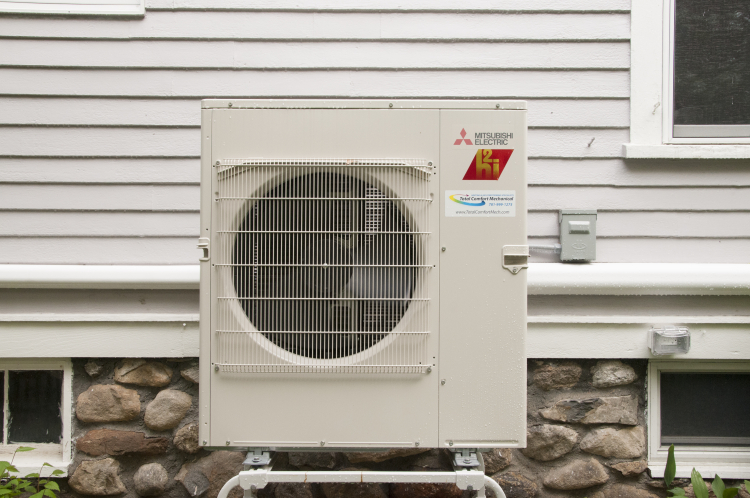
Across Massachusetts, more homeowners are taking a closer look at heat pumps to improve the energy efficiency of their homes.
Switching to a heat pump can reduce costs over time, improve overall energy efficiency, and help shift toward cleaner power sources. To understand heat pumps, it helps to look at how they work and what makes them different.
What Is a Heat Pump?
A heat pump is a device that moves heat instead of creating heat by burning fuel. Think of it as a super-efficient air conditioner that can run in reverse.
In summer, it pulls heat out of your home to keep things cool, while in winter it pulls heat inside from the outdoors. Even when it feels cold outside, there’s still heat energy in the air. A heat pump captures that heat and transfers it indoors. See technical illustrations to understand how heat pumps work during heating and cooling season.
Consider your refrigerator, which removes heat from inside the fridge and releases it into your kitchen. A heat pump uses the same basic idea on a larger scale.
Because it moves heat instead of generating it, a heat pump can deliver higher energy efficiency than traditional systems that burn oil or gas.
Types of Heat Pumps
There are two main types of heat pumps used in homes:
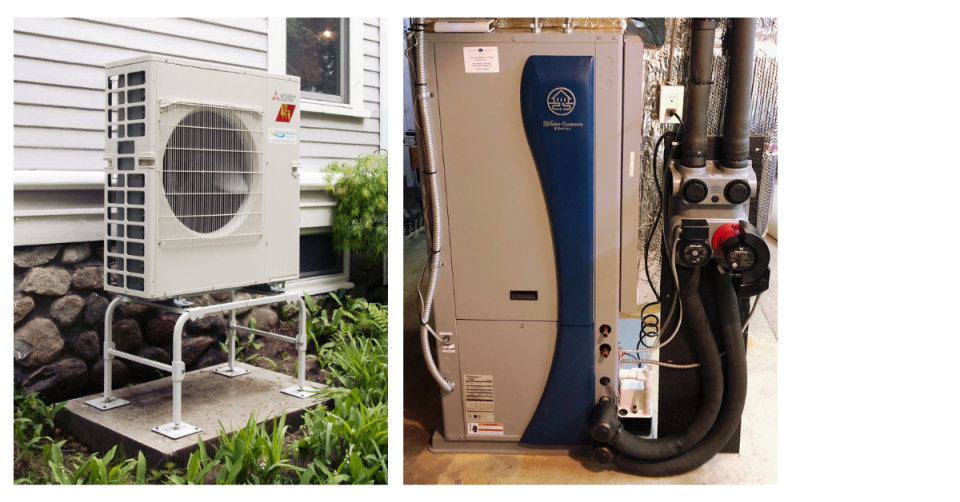
Air-source heat pumps are the most common, pulling heat from the outside air.
They’re often installed as mini-split systems, with an outdoor unit connected to one or more indoor wall units. Some homes use ducted versions, while others go fully ductless.
Why people like them:
- Lower upfront costs
- Flexible for single rooms or whole homes
- Easier to install in existing houses
Ground-source (geothermal) heat pumps pull heat from the ground through buried pipes, where temperatures stay relatively stable year-round.
Why people like them:
- Extremely high energy efficiency
- Consistent performance in cold weather
Why Heat Pumps Are Popular
Heat pump technology has improved in recent years. Modern cold-climate systems are designed to work efficiently even during Massachusetts winters. They also come with some practical benefits:
- One system for heating and cooling
- No on-site fuel burning, which supports cleaner air
- More consistent temperatures throughout your home
- A step toward using more clean energy instead of fossil fuels
How Heat Pumps Change Your Energy Bills
One of the biggest differences with a heat pump isn’t just how you heat your home, but how you pay for it.
If you currently use oil or propane, you’re used to large, occasional fuel deliveries. Costs can spike during the winter and feel unpredictable. With a heat pump system, most of your heating shifts to electricity, so electric bills rise in winter, but fuel delivery costs drop or disappear entirely.
In summer, heat pumps are typically more efficient than older window AC units or aging central air systems, so they often reduce cooling costs as well—another boost to overall energy efficiency.
Why Heat Pumps Are So Efficient
The key to understanding a heat pump’s energy efficiency is that it moves heat instead of creating it.Efficiency is often measured using something called the Coefficient of Performance (COP), which is a measure of how much heat you get compared to the electricity you use.
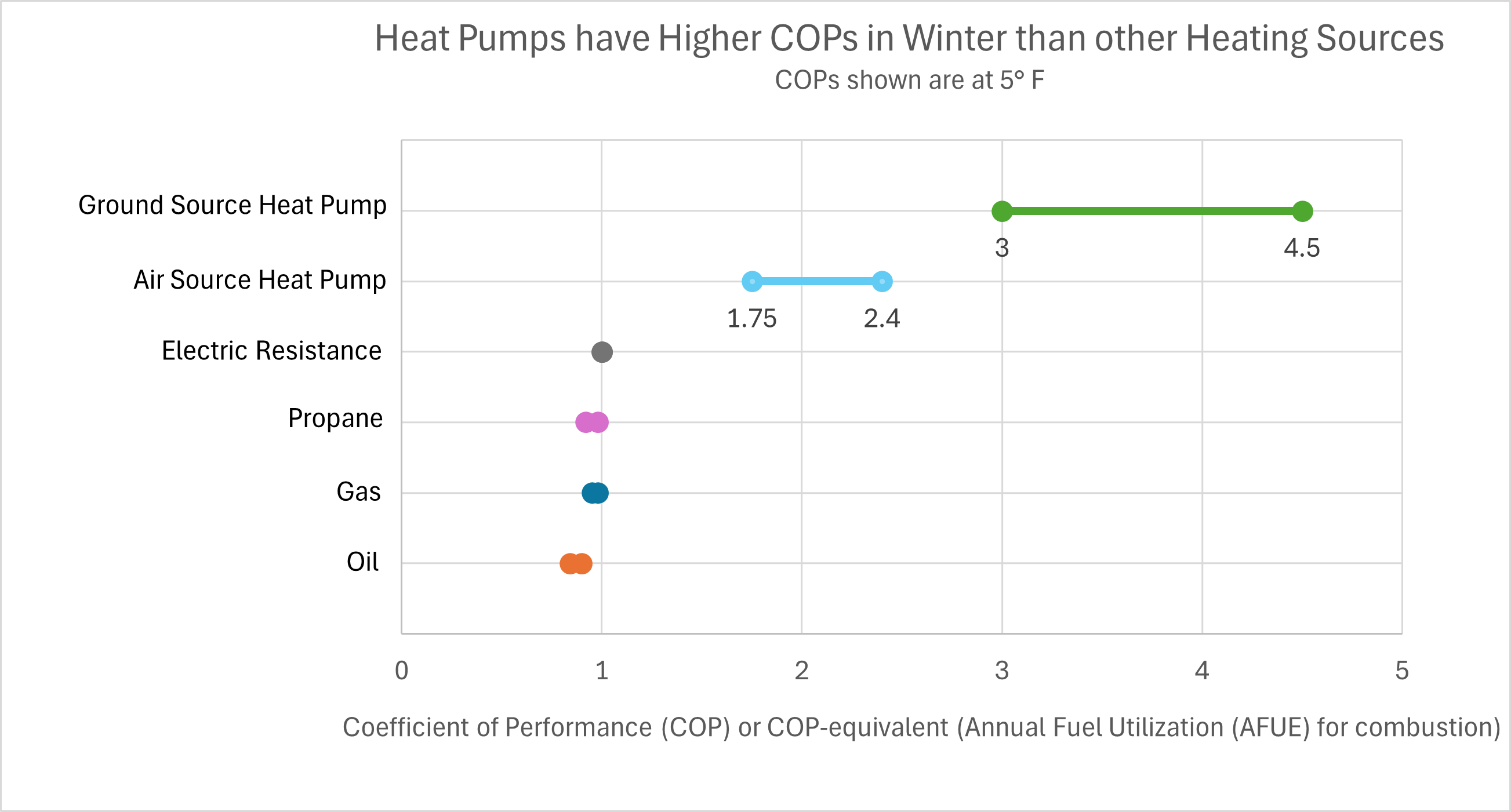
For example, the average cold climate air-source heat pump system has a COP of around 2 at 5° F. This means you get 2 units of heat for every 1 unit of electricity. At 32° F, the air-source heat pump increases to a COP of 3, so it’s even more efficient. At either outdoor temperature, that level of performance is difficult for traditional heating systems to match. They make heat by burning fuel so they can’t exceed a COP of 1.
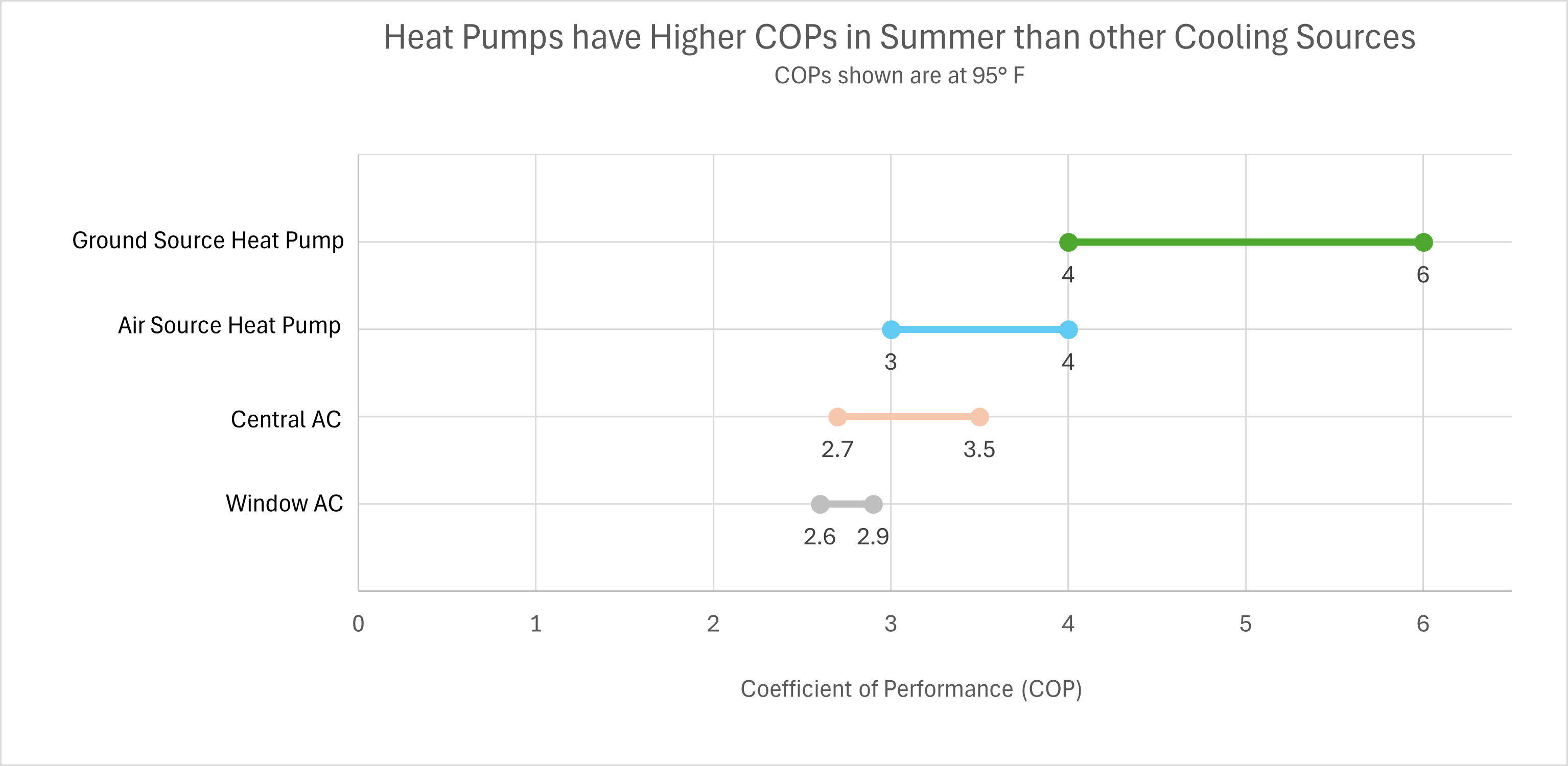
In the summer, heat pump systems are also more efficient producers of cooling than their conventional AC counterparts. Ground-source heat pumps are the most efficient type of heat pump but due to the drilling needed to install them, they are more expensive to buy upfront than air-source heat pumps.
Getting the Most Out of a Heat Pump
A heat pump performs best when your home is well insulated, air leaks are sealed, and double- or triple-paned windows are installed, as even a high-performance system can lose efficiency when conditioned air is constantly escaping.
Instead of turning the thermostat down significantly at night, heat pump systems work best when maintaining a steady temperature.
Many homeowners start with a home energy assessment to identify upgrades that improve comfort and reduce wasted energy.

Special Electric Rates Can Help Lower Costs
In Massachusetts, new electric rates are making heat pumps even more appealing.
For the first time ever in Winter 2025/2026, the Massachusetts Department of Public Utilities approved lower winter electric rates for households with heat pumps. The rates are projected to save $540 annually for qualifying heat pump users.
The reduced rate applies to distribution charges for all electricity use in the household, not just the heat pump system, so lighting, appliances, and even electric vehicles also benefit. Eversource customers pay lower electric transmission charges as well.
| Company | Base distribution seasonal heat pump rate | Non-heat pump base distribution rate (R-1) | Effective Date |
|---|---|---|---|
| Eversource | $0.02052 per kWh* | $0.06264 per kWh | November 1, 2025 |
| National Grid | $0.02440 per kWh | $0.06677 per kWh | November 1, 2025 |
| Unitil | $0.03633 per kWh | $0.10176 per kWh | November 1, 2025 |
* Eversource's transmission seasonal heat pump rate is $0.01492 per kWh. The transmission rate for a non-heat pump rate for an R-1 customer during that same period is $0.04545 per kWh.
Programs supported by organizations like Mass Clean Energy Center and Mass Save are helping expand access to heat pumps and encourage adoption of clean energy home technologies.
A More Efficient, Cleaner Way to Heat and Cool Your Home
Heat pumps replace not only your heating system, but how your home uses energy.
Switching from fuel-based heating to electricity can improve energy efficiency, reduce fossil fuel reliance, and take advantage of a grid increasingly powered by renewable energy sources like wind and solar.
With improved technology, incentives that reduce the up-front cost, and expanding access to clean energy, heat pumps are becoming an appealing choice for many Massachusetts homeowners.
Want to understand how heat pumps work in the real world? Explore stories from residents who’ve made the switch to air‑source and ground‑source heat pumps.