
The Massachusetts electric grid is changing to accommodate increased demand and new energy sources that enable a clean, modern power system. At the same time, more frequent severe weather events pose a challenge to the electric grid. Mass Clean Energy Center is using federal funding to enhance the resilience and reliability of the state’s grid.
Two recently awarded projects under the MassCEC Grants for Enhancing Massachusetts Grid Resilience and Reliability Program highlight the potential of microgrids in Massachusetts. Microgrids are a suite of tools that can improve resilience, or the ability to prepare for, respond to, and recover from disruptive events.
Microgrids Explained
Microgrids, as defined by the U.S. Department of Energy (DOE), are a group of interconnected loads (such as buildings or specific electrical circuits in a facility) and distributed energy resources (such as solar and battery storage systems) that can act as a single controllable entity. Microgrids often connect to the main (or “macro”) grid, but they can disconnect from the macro grid to operate in “island mode”. Because microgrids can operate independently of the larger electric system, they can allow a location to maintain power even during an outage on the main grid. Microgrids can also lower costs, reduce environmental impacts from electricity use, and enable integration of renewable energy resources.
The University of Massachusetts Amherst and the Wakefield Municipal Gas and Light Department (WMGLD) are demonstrating how microgrids can provide resilience, cost savings, and other benefits to their communities.
UMass Amherst Upgrades its Microgrid
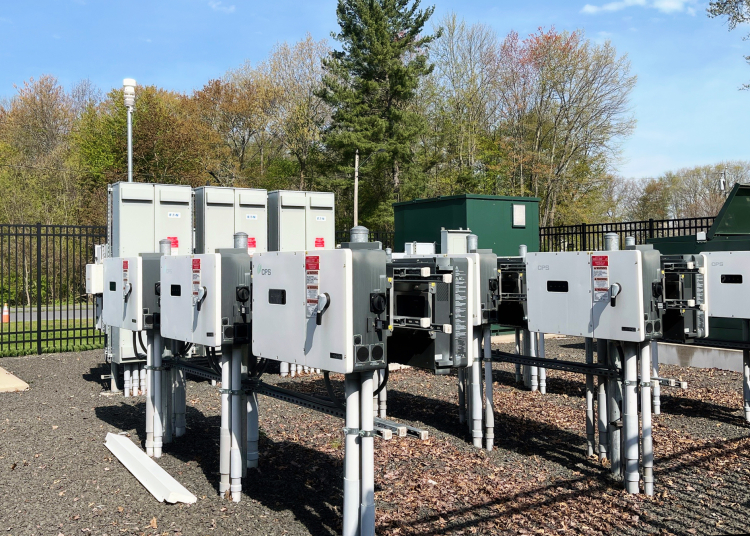
UMass Amherst received over $1.6M in federal funds awarded by MassCEC to upgrade its campus microgrid. The improvements included installing automatic transfer switches (ATS) at five buildings, protective relay upgrades at 45 locations, and construction of an underground duct bank for improved resiliency. ATS can quickly shift the site from the larger electric grid to local power in the event of an outage while protective relays isolate faults in the system to allow continuous and safe operations. The underground duct bank shifts a vulnerable electric line underground, helping to avoid many of the key risks facing our electric grid such as storm damage. The UMass Amherst microgrid features advanced battery storage and the largest behind-the-meter solar array in Massachusetts.

These upgrades will improve reliability in normal operating conditions and enhance resilience in the event of an outage. UMass Amherst serves as an emergency shelter and provides essential services for Hampshire County during large scale emergencies, and is also able to support Hampden and Franklin counties (totaling nearly 700,000 residents). The university’s microgrid improvements will support buildings that provide communication, health, food, and heating/cooling services in the event of an emergency.
Wakefield, MA Creates a Microgrid within its Energy Park
WMGLD received over $2.8M in federal funds awarded by MassCEC to support its Energy Park project microgrid.
The Energy Park, located at Wakefield High School and Northeast Metropolitan Regional Vocational High School, will provide backup power during outages and cost savings to WGMLD’s customers. In the event of an extended outage, one of the schools will be designated as a community cooling or warming center and will be able to provide essential services to the town of Wakefield (approximately 27,000 residents).
Additionally, the project will lower costs for WGMLD’s ratepayers by reducing peak demand. The electric grid is built to accommodate the few hours of the year when electric usage is highest – the peak demand - which typically occurs during hot summer afternoons. The microgrid components, including solar and battery storage, can be strategically dispatched to reduce WGMLD’s peak demand. This saves money for the utility, and these cost savings are passed on to customers. This project is expected to provide up to $12 million in avoided costs over its lifespan via peak demand shaving.
We’re Funding More Microgrid Projects
The UMass Amherst and WMGLD projects demonstrate how microgrids can enhance resilience, enable a modern grid, and support communities during outages.
MassCEC is reopening the Grants for Enhancing Massachusetts Grid Resilience and Reliability Program in June 2026. The upcoming funding round aims to support additional microgrid development in the state. To be notified when the funding round opens, subscribe to MassCEC’s alerts about topics and programs.