
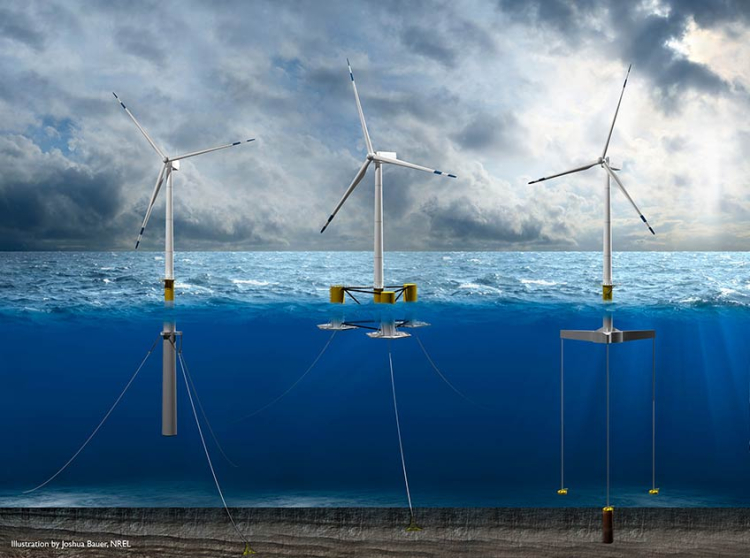
As offshore wind development expands into deeper waters, a key question has emerged in the Gulf of Maine: how will fishing and floating offshore wind operate in the same space?
In early conversations with offshore wind developers and fishermen, one thing quickly became clear — both sides were making many assumptions. Some developers believed fishing activity wouldn’t be significantly affected, while some fishermen imagined a worst-case scenario of losing access to traditional fishing grounds altogether. In reality, neither group has had the opportunity to test what coexistence might actually look like.
This project grew out of that gap in real-world knowledge: if we don’t yet know how fishing and floating offshore wind might operate together, we need a way to explore that question safely and collaboratively.
A Virtual Test Run for Fishing and Offshore Wind
This project gives fishermen a chance to test what fishing around floating offshore wind might look like before it becomes real. Using a state-of-the-art maritime simulator, fishermen will step into a space that looks and feels like the wheelhouse of their own vessel. They’ll be able to navigate through a virtual floating offshore wind array, adjust weather conditions, and deploy their fishing gear just as they would at sea.
From the wheelhouse, they’ll see wind turbines, rolling seas, and other vessels. From a side profile view below the surface, they will see mooring lines, anchors, and cables that hold floating turbines in place and transmit power back to shore. While there have been real-world studies testing fixed fishing gear near floating offshore wind in Scotland, mobile fishing gear has never been tested around floating offshore wind arrays. With time before construction and operations plans are finalized in the Gulf of Maine, this work aims to inform what future projects could look like by using fishermen’s operational knowledge and lived experience.
Blending Fishermen’s Experience with Offshore Wind Design
While the simulator workshops are planned for late spring 2026, much of the work is already underway to design the simulator scenarios. At this stage, GMRI has been conducting in-depth interviews with fishermen across the region, asking them how they currently understand floating offshore wind and what they think coexistence might look like. These conversations create space for fishermen to voice concerns, surface assumptions, and articulate how they would feel fishing or navigating within a future floating offshore wind array.
At the same time, GMRI is working closely with technical partners to understand what floating offshore wind in the Gulf of Maine may look like. That includes researching different platform types, mooring systems, anchors, cable configurations, and spacing options and assessing what is feasible given the Gulf of Maine’s water depths and seafloor conditions.
By grounding the virtual scenarios in both operational fishing knowledge and site-specific offshore wind design, fishermen will be able to test their ideas, identify barriers, and explore potential strategies for coexistence before floating offshore wind reaches the permitting and operations phase in the Gulf of Maine.
Partnership Across the Ocean Industry
Fishermen are central to the project, not just as participants in upcoming simulator workshops, but with their willingness to engage, even amid uncertainty and concern, shaping the direction of the work from the beginning.
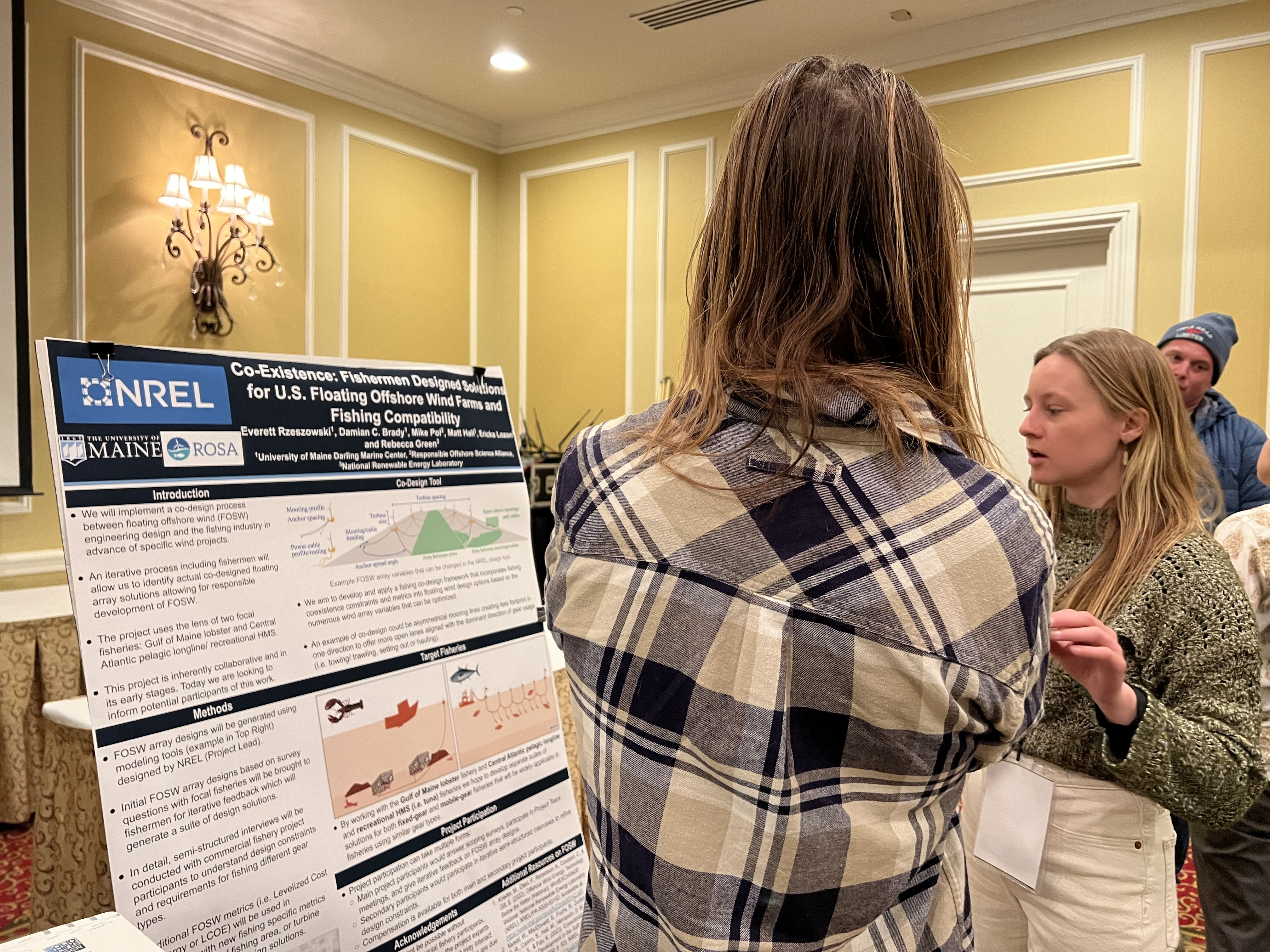
This project brings together a wide network of technical and community partners. We’re working closely with the United States Maritime Resource Center (USMRC) to build realistic simulation environments, alongside technical experts from the Responsible Offshore Science Alliance (ROSA), the National Offshore Wind Research and Development Consortium (NOWRDC), the University of Maine, and offshore wind developers including Invenergy and Avangrid. Equally important are our community partners: the Cape Cod Commercial Fishermen’s Alliance, the Massachusetts Lobstermen’s Association, and the Gloucester Fisheries Commission help us reach and connect with fishing communities. Support from the Massachusetts Clean Energy Center has made it possible to bring these perspectives together early, fostering the trust and collaboration needed to explore coexistence in a meaningful and community-centered way.
From Concern to Collaboration
With floating offshore wind still years away from becoming a reality in the Gulf of Maine, there is a rare opportunity to test ideas, and bring fishermen into the conversation. The upcoming simulator workshops represent a shift from debating hypotheticals to experiencing possibilities. Coexistence isn’t just about technology; it’s about willingness, trust, and open communication between the two industries. With strong interest from more than 30 fishermen to participate in the simulator workshops, we are already seeing this willingness for collaboration and communication taking shape.
To learn more about this project and GMRI’s work at the intersection of fisheries and offshore wind visit GMRI's website.