
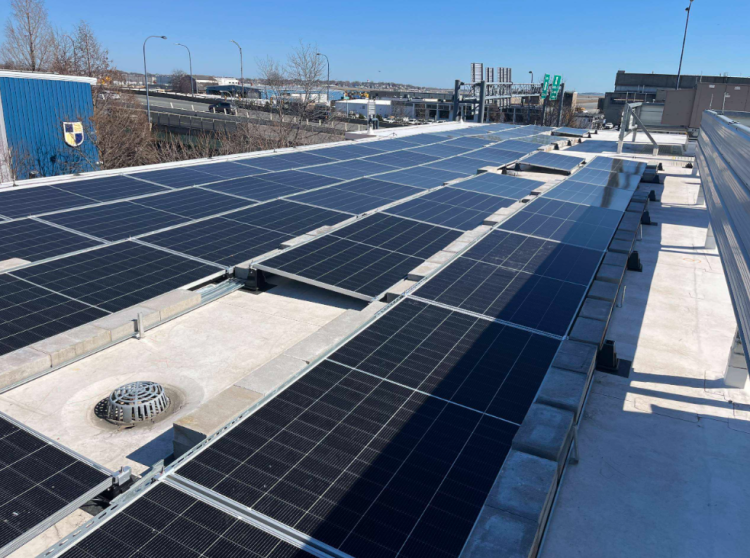
Excel Academy Charter High School in East Boston completed a rooftop solar expansion in August 2026 that doubled its solar capacity to 50% of its electricity needs. Grant funding from MassCEC’s Green School Works program enabled the school to complete this project years ahead of its original timeline.
In addition to lowering electricity costs, the project will reduce greenhouse gas pollution and build on the school’s efforts to reduce its carbon footprint, helping advance Massachusetts’s clean energy transition.
Excel’s Path to Solar Energy
Chris Reed, Director of Capital Planning and Facilities at Excel Academy Charter Schools, explained why this solar project was important to complete. “We use a lot of energy and we need to offset that to be a responsible member of the community. We obviously want to save some money as well,” he said.
Solar was part of the school’s plan from the start. Built in 2016, the high school was ‘PV-ready,’ meaning it was designed and pre-wired to support future rooftop solar panels. The construction budget did not cover installing the system at the time of construction, so Excel planned a multi-phased approach to installing solar panels over the next decade.
In 2024, Excel installed its first rooftop solar panels with the capacity to supply 25% of its annual electricity needs.
“We planned to use this array to earn back some of the investment then put more solar panels up in 5 to 8 years,” Reed said.
Speeding up the Timeline
Mass Clean Energy Center’s Green School Works program helps public K-12 schools cut pollution, improve energy efficiency and mitigate climate change impacts in their schools through grants and technical assistance opportunities. For Excel Academy, a $173,841 Green School Works grant made it possible to move forward with a planned solar expansion years sooner than expected, accelerating the school’s path toward its clean energy goals.
“Once this [Green School Works] grant became available, we realized, ‘Wait a second, we can do this sooner,’” Reed said. “And that’s 5-8 fewer years’ worth of environmental pollution.”
Additional rooftop solar panels were installed in the winter of 2026, and as of August 2026 the school’s solar has completed interconnection with the utility grid.
Navigating Challenges
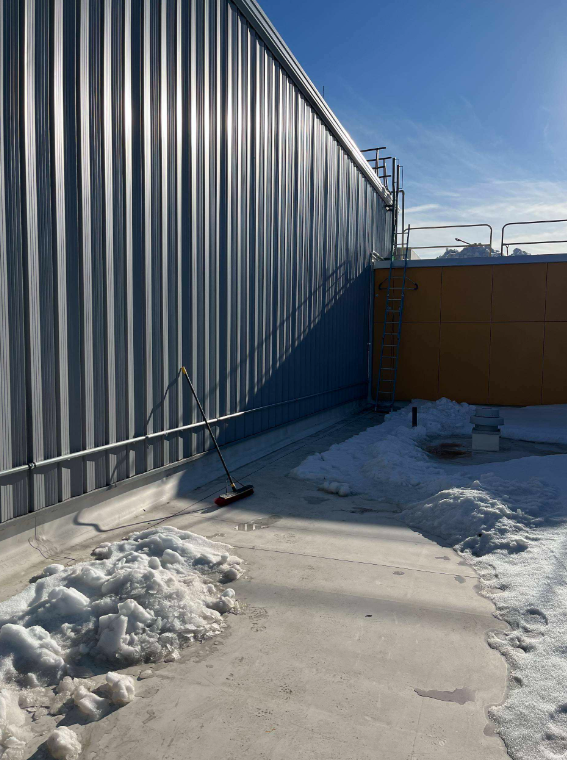
This past winter’s back-to-back snowstorms created unexpected challenges during installation. Multiple feet of snow accumulated on the roof where the new solar panels were scheduled to be installed over a holiday break. Reed commended the Boston Solar team for safely clearing snow from the roof to keep the project moving.
After installation, Excel faced another hurdle: the wait to connect the new panels to the utility grid, a process known as interconnection. This connection is required before the school can use the additional solar power generated by the system. Reed said the utility provider had a backlog of solar projects awaiting interconnection, leaving the timeline outside the school’s control. He credited Resonant Energy with helping navigate the interconnection process and securing the connection just in time for the school’s opening.
Limited roof space means Excel will need to complement solar with other energy-efficient solutions to meet the school’s electricity needs. "It’s a testament to why we also need to cut down on our energy usage to balance what we’re generating," Reed said.
More Solar Power, Lower Costs, and Less Pollution
The new solar panels are expected to make about 67,000 kilowatt-hours of electricity in their first year. That will cover another 25–33% of the building’s yearly electricity use. Together, the old and new panels are expected to provide more than half of Excel’s electricity each year.
“From a cost perspective, it’s huge,” Reed said. “We can now put that money into things that are going to help East Boston and Chelsea kids. We can hire an extra special ed teacher.”
The school plans to hold an event to celebrate the new solar panels and help students learn about the project. For the first phase, the school held a ‘Carbon Cutting’ ceremony featuring student presentations and visits from local elected officials.
For Reed, the project demonstrates the value of planning ahead. Having a solar expansion plan in place helped the school pursue Green School Works funding when it became available. The district's buildings have reached their practical solar capacity, so he is planning ahead for HVAC upgrades for the district.
With Green School Works support, Excel Academy and other Massachusetts schools are speeding up clean energy upgrades that lower costs and create healthier learning environments for students.
Learn more about grants and technical assistance for eligible K–12 public schools through Green School Works.