
Preparing people for careers in offshore wind takes more than individual training programs. It also depends on strong partnerships, ongoing collaboration, and opportunities for organizations to learn from one another.
That approach is at the heart of Mass Clean Energy Center’s Offshore Wind Works (OSWW) Community of Practice, a statewide network connecting people and organizations working to prepare Massachusetts residents for careers in offshore wind
Since 2018, Offshore Wind Works for Workforce (OSWW) has invested more than $21 million to help build a strong and inclusive offshore wind workforce in the state. These investments have supported 22 new offshore wind training programs, seven new higher education programs, and nearly $7.8 million in training equipment and infrastructure. OSWW-funded projects have also created opportunities for approximately 704 union training participants, 810 career upskilling trainees, and 69 pre-apprenticeship and apprenticeship participants.
Beyond workforce training, OSWW has supported five community outreach initiatives and engaged nearly 10,900 K-12 students, helping raise awareness of offshore wind careers. As the program grew, MassCEC saw an opportunity to build on these investments by creating a space for organizations to share lessons, strengthen relationships, discuss emerging challenges, and identify opportunities to collaborate. The result was the OSWW Community of Practice.
Today, the Community of Practice brings together educational institutions, workforce boards, labor unions, community organizations, employers, environmental organizations, training providers, and industry professionals. Members meet four times a year—twice in person and twice virtually—to share knowledge, build relationships, and stay connected to evolving industry and workforce needs. Workforce development consultants Rebekah Lashman and Nancy Snyder of Rebekah Lashman Consulting help shape each session around participants’ priorities, including member and grantee spotlights, emerging topics, and facilitated discussion.
Highlights from the July Community of Practice Meeting
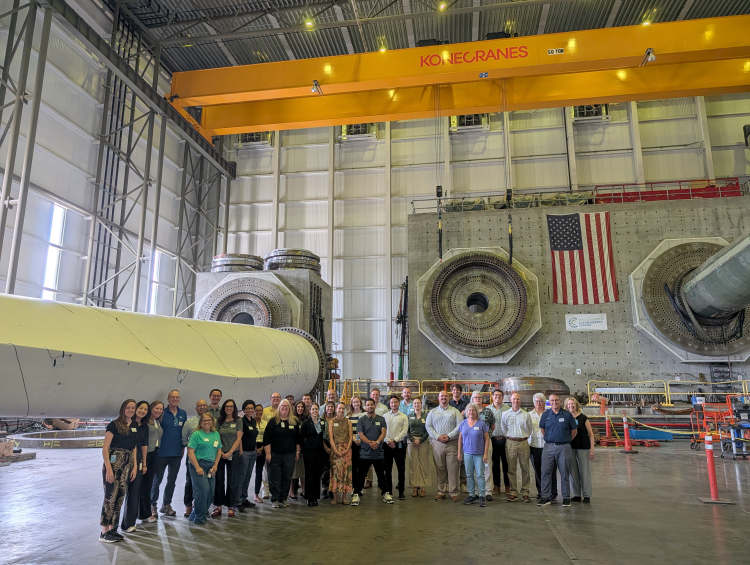
On July 22, more than 30 Community of Practice members gathered at MassCEC’s Wind Technology Testing Center (WTTC) in Boston for a meeting that brought together several sides of offshore wind workforce development, from the technology behind the industry to community engagement and career pathways.
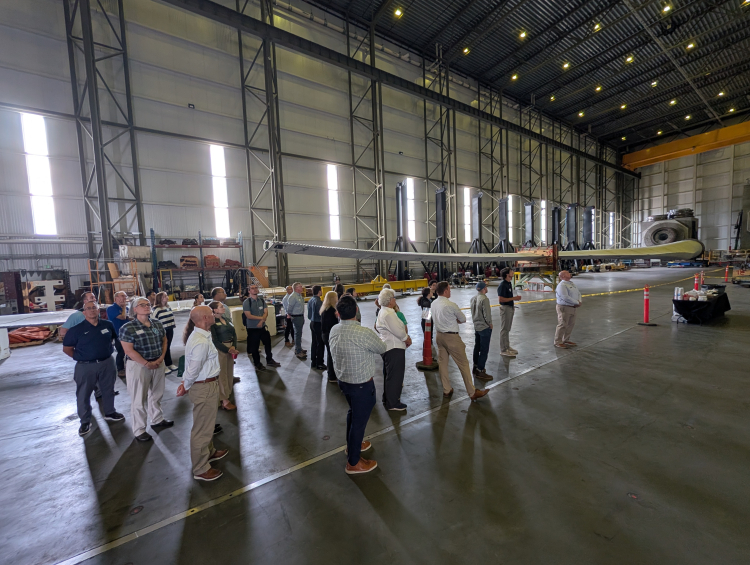
Members toured the WTTC testing floor, where large wind turbine blades undergo static and fatigue testing designed to simulate years of operation. The tour offered a close-up look at the scale, equipment, and technical expertise behind wind energy technology, and gave workforce and education partners a better understanding of the work behind the careers they are helping people prepare for. Participants later identified the tour as one of the most valuable parts of the meeting.
For members like the National Offshore Wind Institute (NOWI) at Bristol Community College, that opportunity to learn alongside industry, workforce, and education partners has been a key part of strengthening training as the sector evolves.
“Those connections gave us a better understanding of the technical skills, workforce needs, and supply chain challenges shaping this new industry, and helped us continually strengthen our training in response,” said Tim Brown, Director of NOWI. “By creating opportunities for the community to share knowledge and solve challenges together, MassCEC helped us—and the broader offshore wind workforce—grow alongside the industry.”
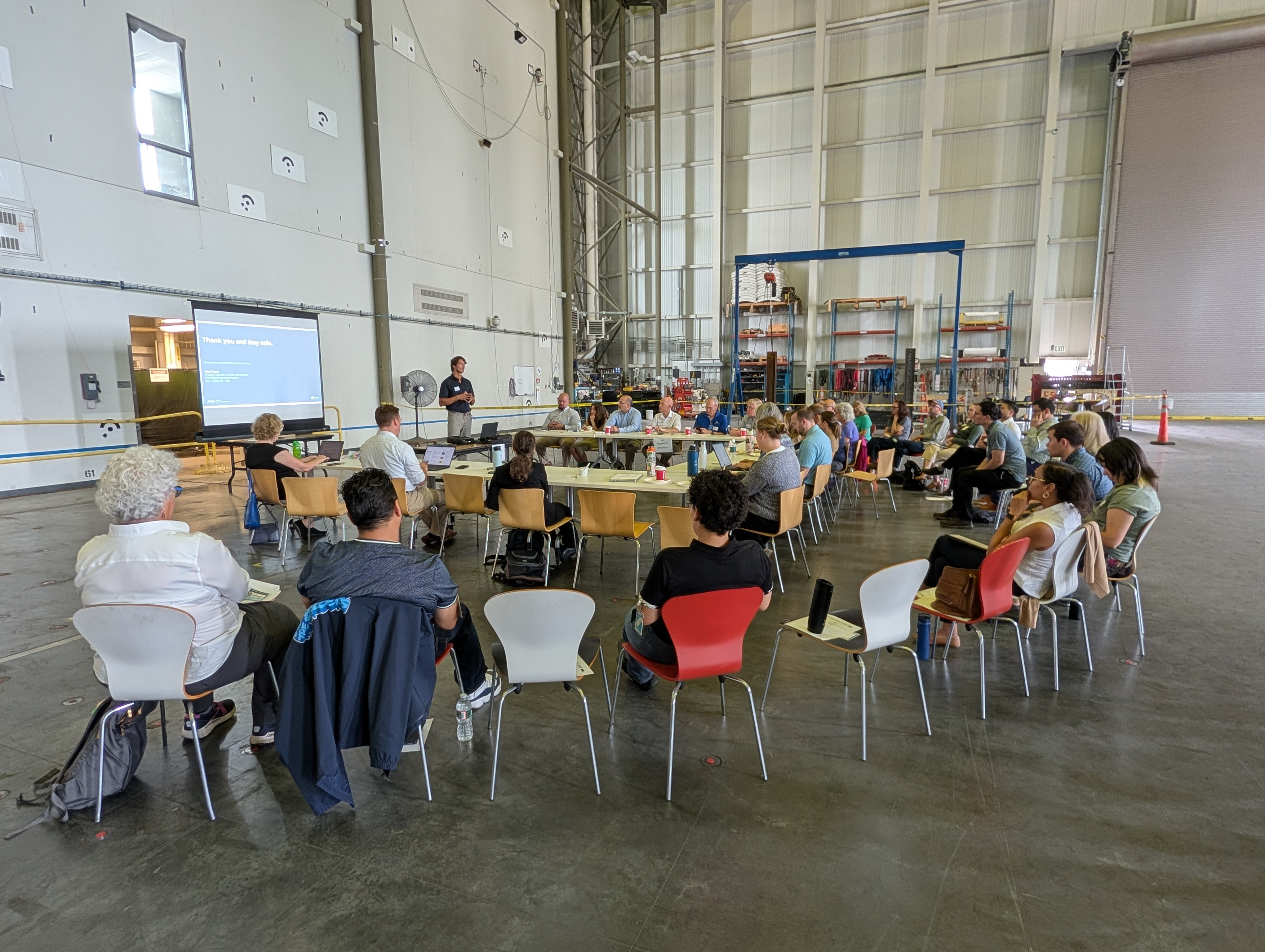
The day also included a presentation from the Environmental League of Massachusetts and the New England for Offshore Wind Coalition on community engagement and public education. Members discussed barriers that can make it harder for residents to understand offshore wind development, including limited access to reliable information, unfamiliarity with the industry, language barriers, and misinformation. The conversation gave members a chance to compare what they are hearing from communities and share approaches for making offshore wind information and career opportunities more accessible.
Members also heard directly from industry. Representatives from Semco Maritime shared an overview of the company’s role supporting Vineyard Wind 1 operations and maintenance and discussed the range of backgrounds that can lead to offshore wind careers, including maritime operations, electrical work, automotive technology, engineering, and other technical fields. Semco also highlighted the role of safety training, technical upskilling, and ongoing professional development for employees working offshore. For workforce organizations, those employer perspectives offer practical insight into the skills companies need and how training programs can adapt as the industry evolves.
The meeting also featured updates on virtual reality tools for career exploration, graduate-level offshore wind education, and careers in marine environmental monitoring, giving members a broader view of new training approaches and career pathways.
Strengthening a Growing Workforce Network
The value of the Community of Practice extends beyond any single meeting. By connecting organizations working toward similar goals, the network gives members a way to exchange ideas, explore potential partnerships, learn about new technologies and training approaches, and bring useful resources and relationships back to their own work.
Kira Lawrence, Director of Clean Energy Extension at UMass Amherst, has seen that value firsthand:
"The [Community of Practice] is an amazing forum for forging partnerships and sharing knowledge with others working in the offshore wind sector in Massachusetts. My team's offshore wind efforts have significantly benefited from our participation. It is clear that the collaborative approach fostered by the Community of Practice is a very impactful way of accelerating offshore wind workforce development in the Commonwealth."
The Community of Practice also provides a way to share new initiatives and capture lessons that can inform future workforce efforts. One example is the Vineyard Wind 1 Reflective Workforce Report, a forthcoming effort to document workforce development lessons from Massachusetts’ first utility-scale offshore wind project. Led by Atlas NextWave in partnership with Rebekah Lashman Consulting, the project will gather insights from developers, contractors, workforce practitioners, and workers to help inform future workforce investments and preserve lessons as the industry evolves.
The network is continuing to grow. The newest round of Offshore Wind Works awards added three organizations that will support additional workforce training, education, and outreach efforts.
As offshore wind continues to evolve, the Community of Practice can help workforce partners respond to new needs and opportunities while carrying knowledge and relationships forward. Through Offshore Wind Works, MassCEC is supporting not only pathways into offshore wind careers, but also the connections that can strengthen the workforce over the long term.
Learn more about Offshore Wind Works, including current workforce funding opportunities.